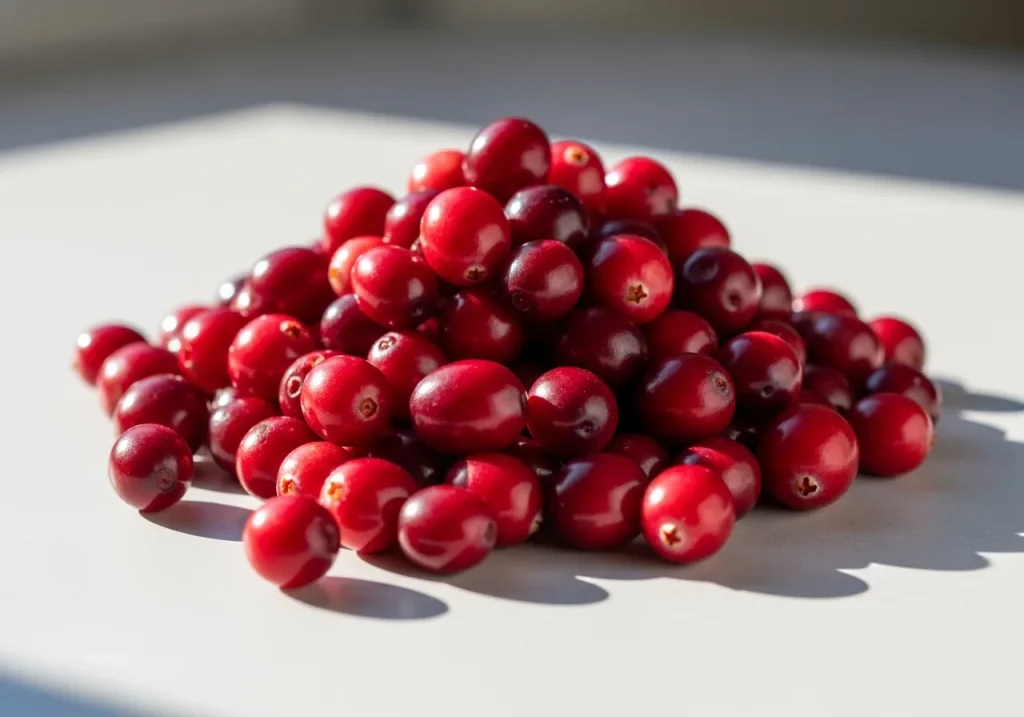
Cranberries are best known for their role in urinary tract health, but their main active compounds — A-type proanthocyanidins — also inhibit bacterial adhesion in the gut and may support cardiovascular health. That dual mechanism is why cranberries appear in research on urinary health and heart health.
Compounds & anti-nutrients in Cranberry
Per 100 g, Cranberry is a notable dietary source of these active compounds. Tap any to see its full sources map and how to work with it.
Why cranberries are good for you
Cranberries contain A-type proanthocyanidins, a subclass of polyphenols that prevent E. coli from adhering to the urinary tract wall, reducing the risk of infection without antibiotics. The same compounds have mild anti-adhesion effects on oral bacteria and may support gum health. Cranberries also supply vitamin C and fibre, though the tart flavour means they are almost always sweetened in commercial products, which dilutes the nutritional benefit.
Cranberry nutrition at a glance
The label shows the numbers, but the practical message is that cranberries are a tart, astringent berry with a genuine urinary-health edge. The healthiest forms are whole frozen cranberries or unsweetened cranberry juice cocktail; sweetened cranberry sauce and dried cranberries contain enough added sugar to negate much of the benefit.
How to buy and use cranberries
Choose frozen unsweetened cranberries or 100% cranberry juice with no added sugar. Dried cranberries are almost always sweetened; if you buy them, check the label for added sugar or juice concentrate. Use cranberries in sauces with turkey, smoothies with oats and blueberries, or baked into muffins. Cranberry juice with added sugar does not provide the same urinary benefit as unsweetened forms.
Common questions
Does cranberry juice prevent UTIs? Unsweetened cranberry juice or capsules can reduce recurrence in people with frequent UTIs, but the effect is modest and inconsistent. It is not a treatment for active infection.
Are cranberries good for heart health? The proanthocyanidins have mild antiplatelet and anti-inflammatory effects, but the evidence for cardiovascular outcomes from whole cranberries is limited.
Explore by health goal
Cranberry is one of many foods that support these goals: