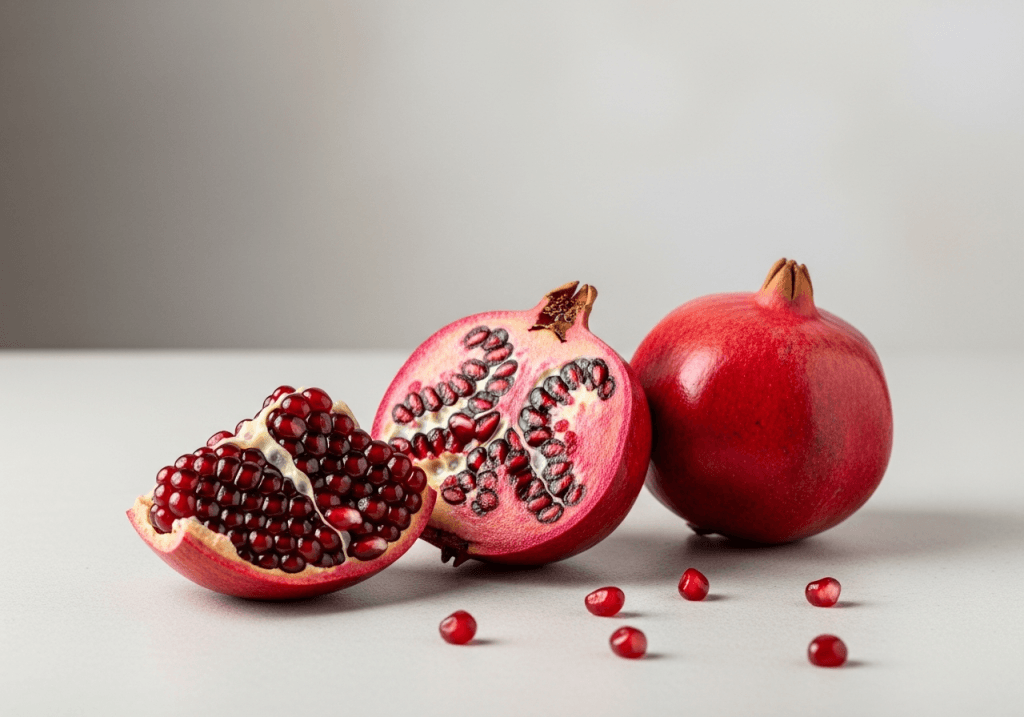
Pomegranate is the ancient fruit whose jewel-like seeds are packed with punicalagins — the largest phenolic antioxidants in any fruit — alongside anthocyanins, ellagic acid and vitamin C. That antioxidant density is why pomegranates appear in research on heart health and skin health.
Compounds & anti-nutrients in Pomegranate
Per 100 g, Pomegranate is a notable dietary source of these active compounds. Tap any to see its full sources map and how to work with it.
Why pomegranates are good for you
Pomegranates’ antioxidant capacity is exceptional: punicalagins are water-soluble polyphenols with stronger antioxidant activity than red wine and green tea in some assays. The juice also inhibits LDL oxidation and improves endothelial function in trials, though commercial juices vary widely in polyphenol content. The seeds supply useful fibre, and the oil extracted from the seeds contains punicic acid, a conjugated linolenic acid with anti-inflammatory effects.
Pomegranate nutrition at a glance
The label shows the numbers, but the practical message is that pomegranate is a flavour-rich, antioxidant-dense fruit that works best when you eat the whole seeds rather than just drinking the juice.
How to buy and use pomegranates
Choose heavy, firm pomegranates with unblemished skin. Store at room temperature or in the fridge for weeks. To eat, score the skin and break it open underwater — the seeds sink and the pith floats. Sprinkle pomegranate seeds on salads with spinach and olive oil, over Greek yoghurt with honey, or into stuffing for lamb. Pomegranate molasses is a concentrated, tangy syrup useful in dressings and marinades.
Common questions
Is pomegranate juice better than the seeds? The seeds contain more fibre and fat; the juice contains more liquid polyphenols. Whole seeds are usually the better choice.
Does pomegranate lower blood pressure? Some trials show modest reductions, especially in people with elevated baseline pressure. The effect is real but not a replacement for medication.
Explore by health goal
Pomegranate is one of many foods that support these goals: