Phytates bind minerals such as iron and zinc, which matters most if your diet is plant-heavy and your iron status is already marginal. Soaking, sprouting, fermenting and cooking all reduce them substantially.
The foods below are the highest sources of phytates among the 125 foods in our database, ordered by mg per 100 g. Treat this as an orientation to which foods sit at the top of the range, not as a complete avoid-list — values vary with variety, growing conditions and preparation, and many foods have never been measured for phytates.
For how phytates behave in the body, see the Phytates compound page.
Flaxseed — the top-ranked source
| Total Fat | 37.3 g |
|---|---|
| Saturated Fat | 3.28 g |
| Sodium | 36.7 mg |
| Potassium | 793 mg |
| Total Carbohydrate | 34.4 g |
| Dietary Fiber | 23.1 g |
| Total Sugars | 1.6 g |
| Protein | 18 g |
Foods highest in Phytates
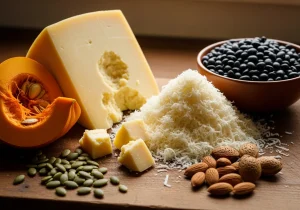
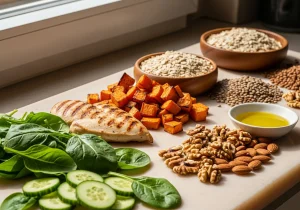
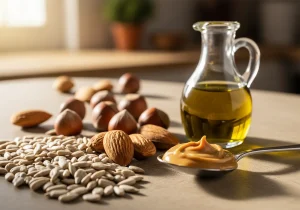
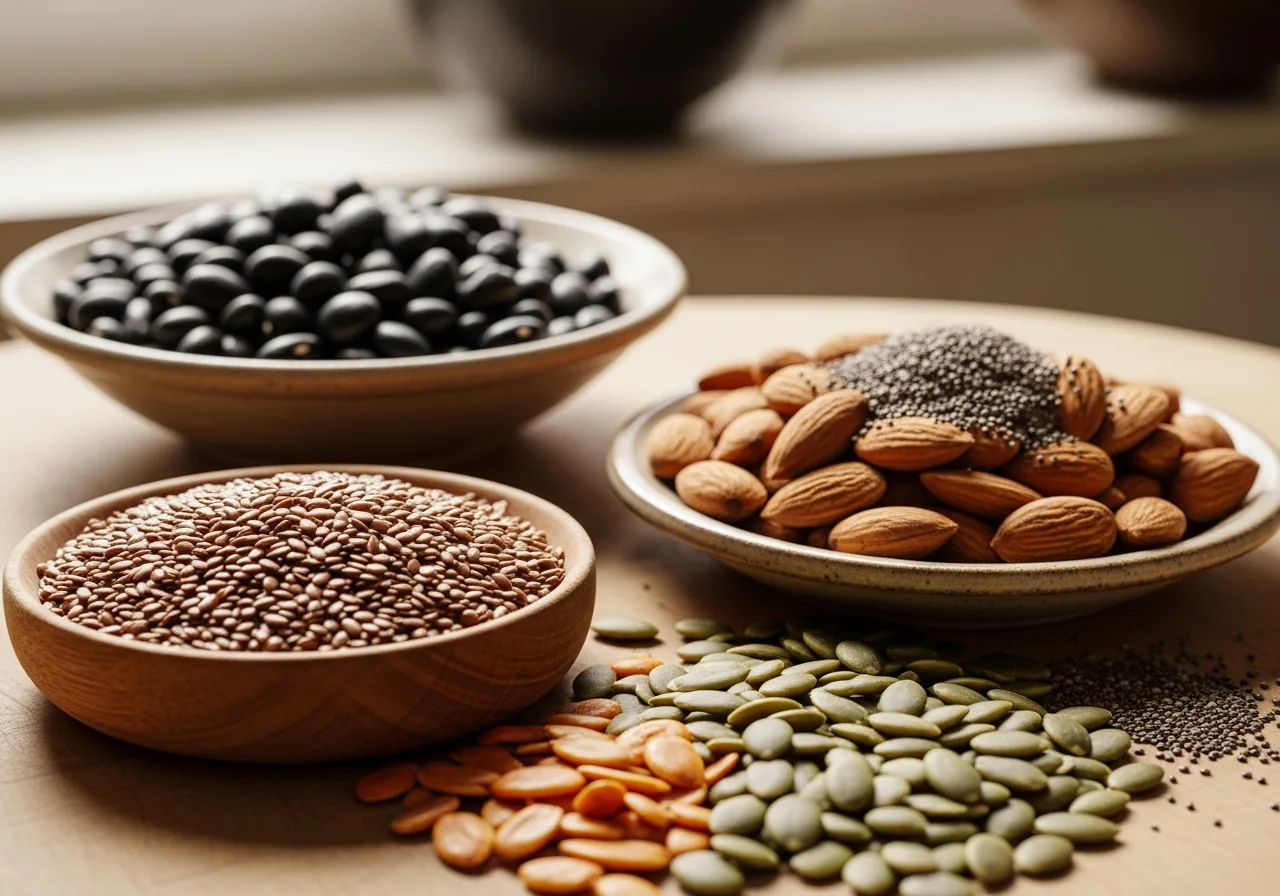
- Flaxseed — 2,700.0 mg per 100g. Thiamine, magnesium, lignans
- Pumpkin Seeds — 1,600.0 mg per 100g. Magnesium, zinc, iron
- Almonds — 1,300.0 mg per 100g. Vitamin E, magnesium, manganese
- Chia Seeds — 1,000.0 mg per 100g. Calcium, phosphorus, plant omega-3 (ALA)
- Black Beans — 1,000.0 mg per 100g. Folate, magnesium, anthocyanins
- Tofu — 1,000.0 mg per 100g. Calcium, manganese, selenium
- Oats — 900.0 mg per 100g. Manganese, phosphorus, magnesium
- Brown Rice — 840.0 mg per 100g. Manganese, magnesium, selenium
- Chickpeas — 550.0 mg per 100g. Folate, manganese, iron
- Lentils — 450.0 mg per 100g. Folate, iron, manganese
How to reduce Phytates in what you already eat
How to Reduce Phytates
Phytic acid is heat-stable but broken down by the enzyme phytase, which soaking, sprouting and especially fermentation activate.
| Method | Typical reduction | How it works |
|---|---|---|
| Soaking (8–24 h) | up to ~50% | Steep in warm, slightly acidic water and discard it before cooking to activate native phytase. |
| Sprouting / germination | ~30–70% | Germinating seeds, grains and legumes for 1–3 days switches on phytase. |
| Fermentation (e.g. sourdough) | up to ~70% | Lactic-acid bacteria and wild yeast lower pH and activate phytase — the single most effective method. |
| Vitamin C with the meal | absorption ↑ | Does not remove phytate but counteracts its grip on non-heme iron. |
Common questions
Are phytates bad for you? For most people, no. Phytates occur naturally in everyday foods, and most of those highest in phytates are foods worth eating. They matter mainly to the minority managing a specific diagnosis, which is who this list is for.
Do I need to avoid these foods? Almost certainly not, unless a clinician has advised it for a specific diagnosis. Most of the foods on this list are nutrient-dense and worth eating; the ones at the top are simply where phytates concentrate.
Does cooking reduce phytates? Phytic acid is heat-stable but broken down by the enzyme phytase, which soaking, sprouting and especially fermentation activate. The table above sets out the specific methods and how much each one removes.
Scientific references & clinical evidence
This guide is built on peer-reviewed research — verify the primary sources below.