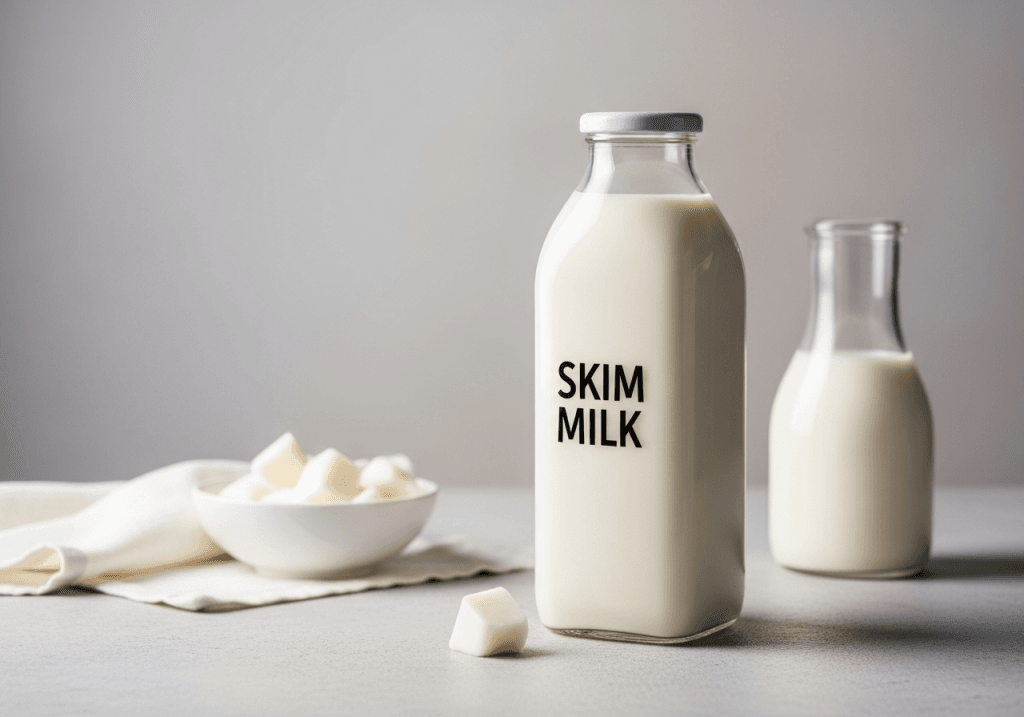
Skim milk, known in Britain as skimmed milk, is whole milk with nearly all the fat removed, leaving the protein, calcium and other nutrients almost intact. That makes it a familiar choice for anyone wanting dairy’s nutrition with fewer calories, and it is most closely linked to bone health.
Compounds & anti-nutrients in Skim Milk
Per 100 g, Skim Milk is a notable dietary source of these active compounds. Tap any to see its full sources map and how to work with it.
Why skimmed milk is good for you
Skimmed milk is an excellent source of calcium, the mineral central to building and maintaining strong bones, in a form the body absorbs well. It also delivers high-quality protein, with both whey and casein, plus vitamin B12 and iodine, a nutrient many diets fall short on that supports thyroid function. Because the fat is gone, all of this comes with very few calories.
The trade-off is that removing the fat also removes the fat-soluble vitamins it carried, which is why many skimmed milks are fortified with vitamin A and vitamin D; checking the label is worthwhile.
Skimmed milk nutrition at a glance
The full breakdown is in the label above, but the headline is a lot of calcium and protein for minimal calories and fat. Its natural sugar is lactose, so people who are lactose intolerant may prefer a lactose-free version or a fortified plant alternative. Skimmed milk is not inherently better than whole milk for everyone; it simply shifts the balance towards protein and away from fat and calories.
How to choose, store and use skimmed milk
Choose milk with a good use-by date and, if you want the full set of nutrients, one fortified with vitamins A and D. Keep it cold at the back of the fridge rather than in the door, where the temperature swings, and reseal it promptly. It works wherever you would use any milk, but it shines in high-protein cooking and shakes. Try it with oats for porridge, or blended with banana and berries.
Common questions
Is skimmed milk better than whole milk? Neither is simply better. Skimmed milk has the same calcium and protein with far less fat and fewer calories, while whole milk is more filling and carries fat-soluble vitamins naturally. The right choice depends on your overall diet and goals.
Does skimmed milk have less calcium than whole milk? No. Removing the fat does not take the calcium with it, so skimmed milk has just as much calcium as whole milk, and often a touch more by volume.
Explore by health goal
Skim Milk is one of many foods that support these goals: