Extra virgin olive oil is the cornerstone fat of the Mediterranean diet, and the evidence for it is unusually strong for a whole food. In the landmark PREDIMED trial, a diet anchored by extra virgin olive oil cut major cardiovascular events by roughly 30% versus a low-fat control. That benefit is usually attributed to its monounsaturated fat and its polyphenols — especially oleocanthal, which has mild anti-inflammatory properties similar to ibuprofen in vitro.
Compounds & anti-nutrients in Extra Virgin Olive Oil
Per 100 g, Extra Virgin Olive Oil is a notable dietary source of these active compounds. Tap any to see its full sources map and how to work with it.
Why extra virgin olive oil is good for you
The fat in extra virgin olive oil is predominantly oleic acid, a monounsaturated fat that improves blood lipid profiles when it replaces saturated fat. But the polyphenols — oleocanthal, hydroxytyrosol and others — are what distinguish extra virgin from refined olive oil. These compounds are studied for endothelial function, inflammation and LDL oxidation, and they degrade quickly when oil is exposed to heat, light or air.
Extra virgin olive oil nutrition at a glance
The label shows the numbers, but the practical message is that olive oil is a fat, not a food. A little goes a long way: 15 ml provides about 120 kcal and 14 g of fat, almost all of it unsaturated. The health case rests on using it to displace less healthy fats, not on consuming it by the spoon.
How to buy, store and use extra virgin olive oil
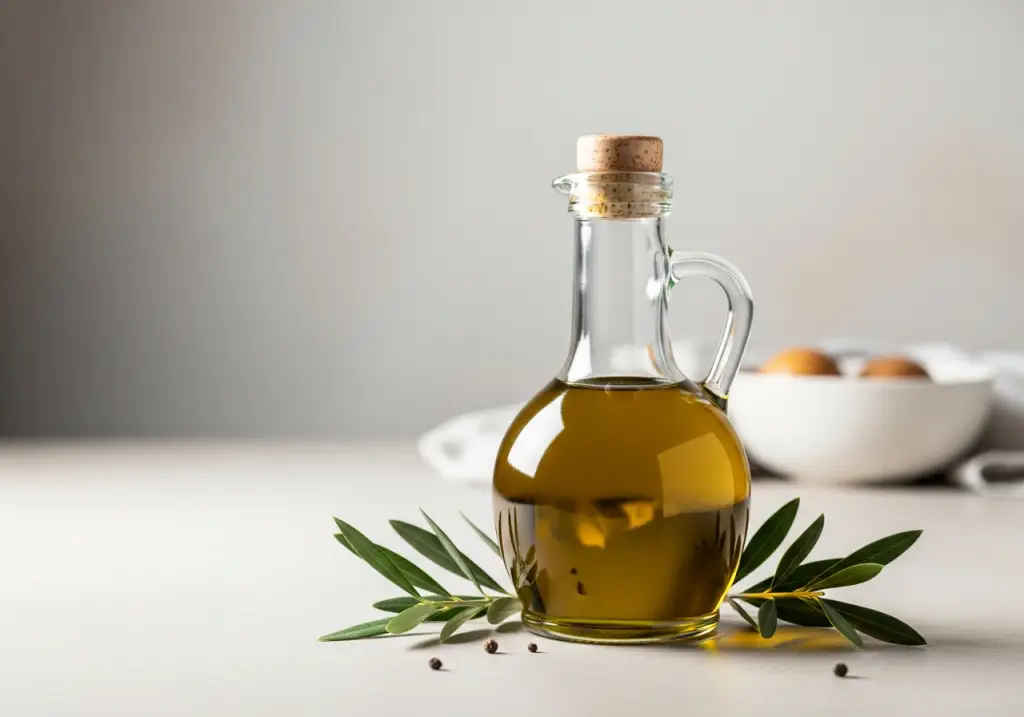
Choose extra virgin, not just olive oil — the latter is usually refined and stripped of polyphenols. Buy in dark glass, store away from heat, and use within a few months of opening. Extra virgin olive oil works splendidly raw on salads, vegetables and bread; it is also stable enough for medium-heat roasting and shallow frying. It pairs with virtually every vegetable and herb in this encyclopedia.
Common questions
Is extra virgin olive oil safe to cook with? Yes, for most home cooking methods. Its smoke point is lower than refined oils, but it is stable enough for roasting and pan-frying up to about 190–200 °C. Deep-frying at high temperatures is where it becomes less suitable.
Does it matter if the oil is from a particular country? Freshness and polyphenol content matter more than geography. Look for a harvest or best-before date rather than marketing claims.
Explore by health goal
Extra Virgin Olive Oil is one of many foods that support these goals: