Immune Support
Immune readiness comes from balanced protein, micronutrients and consistent habits.
Key compounds
The evidence base for this goal focuses on several well-studied compounds.
- Selenium — Selenium is a trace mineral the body needs only in tiny amounts, yet its influence is far-reaching. It forms the active core of selenoproteins — specialised
- Vitamin D — The sunshine vitamin: scarce in food (oily fish lead), it works like a hormone for bone, muscle and immune health.
- Vitamin C — Vitamin C is a water-soluble antioxidant the body cannot store for long, so a regular dietary supply matters. Beyond immune support it is essential for collagen…
- Zinc — Zinc is a workhorse trace mineral behind immune function, skin repair and taste. As with iron, the phytates in unsoaked legumes and grains bind zinc and…
Best foods for this goal
The foods below are good practical choices.
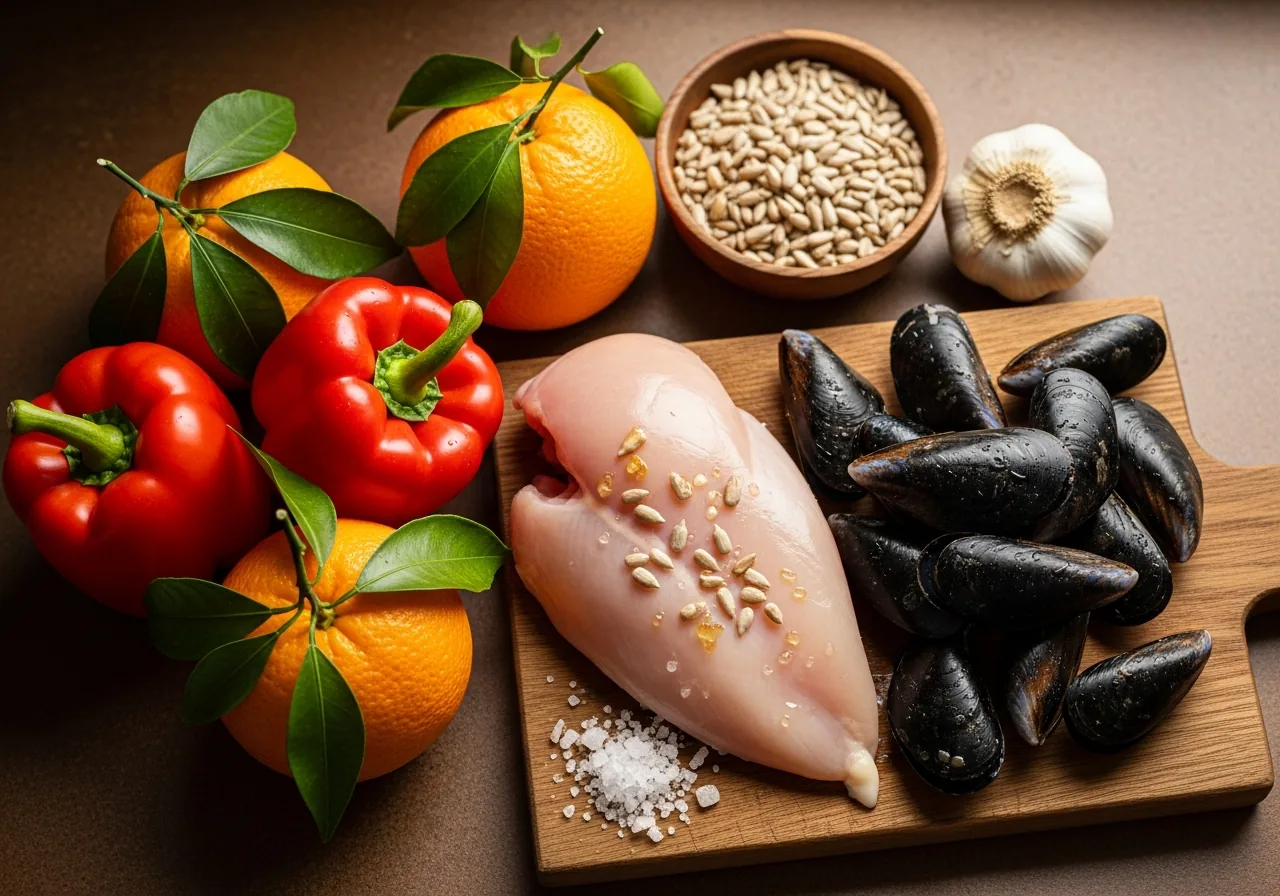
Orange
Nutrition Facts
Per 100 g, edible portion · values per 100 g
Calories
47
| Total Fat | 0.12 g |
|---|---|
| Saturated Fat | 0.02 g |
| Sodium | 0 mg |
| Potassium | 181 mg |
| Total Carbohydrate | 11.75 g |
| Dietary Fiber | 2.4 g |
| Total Sugars | 9.35 g |
| Protein | 0.94 g |
Vitamin C, folate, thiamine, hesperidin
Glycemic index: 43
Source: USDA FoodData Central (FDC 169097)
Red Bell Pepper
Nutrition Facts
Per 100 g, edible portion · values per 100 g
Calories
31.3
| Total Fat | 0.13 g |
|---|---|
| Saturated Fat | 0.059 g |
| Sodium | 0 mg |
| Potassium | 213 mg |
| Total Carbohydrate | 6.65 g |
| Dietary Fiber | 1.16 g |
| Total Sugars | 4.2 g |
| Protein | 0.9 g |
Vitamin C, vitamin A, vitamin B6, carotenoids
Glycemic index: 15
Source: USDA FoodData Central (FDC 2258590); sat-fat: FDC 170108
Chicken Breast
Nutrition Facts
Per 100 g, edible portion · values per 100 g
Calories
165
| Total Fat | 3.6 g |
|---|---|
| Saturated Fat | 0.7 g |
| Sodium | 74 mg |
| Potassium | 256 mg |
| Total Carbohydrate | 0 g |
| Dietary Fiber | 0 g |
| Total Sugars | 0 g |
| Protein | 31 g |
Niacin, vitamin B6, selenium, phosphorus
Source: USDA FoodData Central (FDC 171477, Chicken breast meat only cooked roasted)
Mussels
Nutrition Facts
Per 100 g · values per 100 g
Calories
86
| Total Fat | 2.24 g |
|---|---|
| Saturated Fat | 0.43 g |
| Sodium | 286 mg |
| Potassium | 320 mg |
| Total Carbohydrate | 3.69 g |
| Dietary Fiber | 0 g |
| Total Sugars | 0 g |
| Protein | 11.9 g |
Vitamin B12, iron, selenium, omega-3 (EPA & DHA)
Source: USDA FoodData Central (FDC 174216)
Sunflower Seeds
Nutrition Facts
Per 100 g · values per 100 g
Calories
609
| Total Fat | 48.4 g |
|---|---|
| Saturated Fat | 4.46 g |
| Sodium | 0 mg |
| Potassium | 657 mg |
| Total Carbohydrate | 24.5 g |
| Dietary Fiber | 7.22 g |
| Total Sugars | 2.62 g |
| Protein | 18.9 g |
Vitamin E, magnesium, selenium, healthy fats, fibre
Source: USDA FoodData Central (FDC 2515381); sugars/sat-fat: FDC 170562
Garlic
Nutrition Facts
Per 100 g, edible portion · values per 100 g
Calories
143
| Total Fat | 0.38 g |
|---|---|
| Saturated Fat | 0.1 g |
| Sodium | 17 mg |
| Potassium | 401 mg |
| Total Carbohydrate | 28.2 g |
| Dietary Fiber | 2.7 g |
| Total Sugars | 1 g |
| Protein | 6.62 g |
Manganese, vitamin B6, vitamin C, allicin
Glycemic index: 30
Source: USDA FoodData Central (FDC 1104647)
Practical takeaways
Focus on consistency, variety and the overall dietary pattern. Smaller daily choices tend to outperform occasional large changes.
Common questions
Is one compound enough? Rarely. Whole foods and dietary patterns usually outperform single-compound strategies.
How fast can diet change inflammation or blood markers? It depends on the marker, the starting diet and lifestyle factors. Expect gradual trends rather than overnight shifts.