Gut Health
Gut health starts with fiber diversity, sensible fermented foods and patterns that support microbial balance.
Key compounds
The evidence base for this goal focuses on several well-studied compounds.
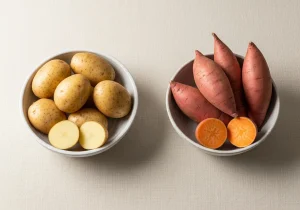
- Resistant Starch — Resistant starch is the maverick of the carbohydrate world: a starch that slips past digestion in the small intestine and arrives, intact, in the colon where
Best foods for this goal
The foods below are good practical choices.
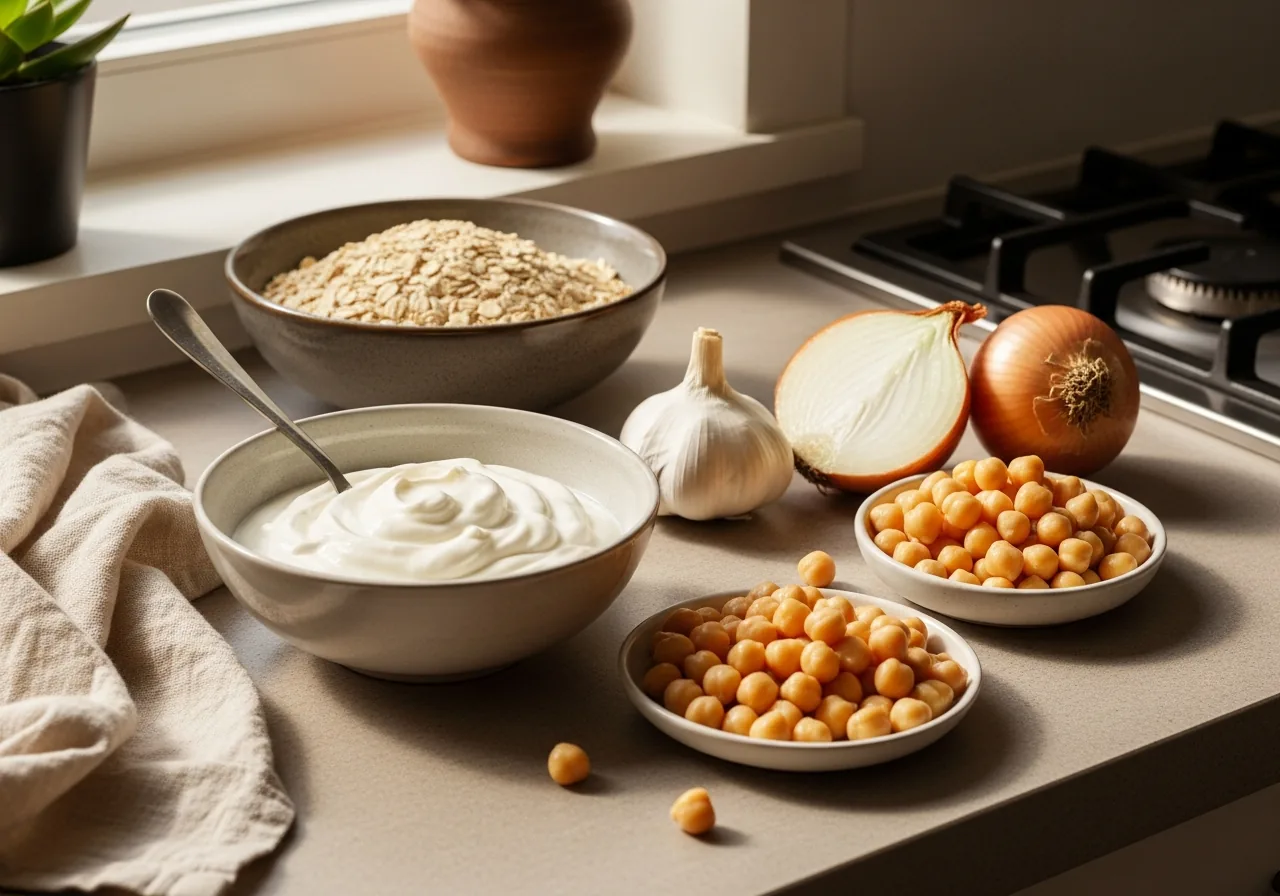
Greek Yogurt (plain, nonfat)
Nutrition Facts
Per 100 g, edible portion · values per 100 g
Calories
61
| Total Fat | 0.37 g |
|---|---|
| Saturated Fat | 0.11 g |
| Sodium | 36 mg |
| Potassium | 141 mg |
| Total Carbohydrate | 3.64 g |
| Dietary Fiber | 0 g |
| Total Sugars | 3.2 g |
| Protein | 10.3 g |
Calcium, vitamin B12, probiotics, iodine
Glycemic index: 11
Source: USDA FoodData Central (FDC 330137)
Oats
Nutrition Facts
Per 100 g, edible portion · values per 100 g
Calories
379
| Total Fat | 6.52 g |
|---|---|
| Saturated Fat | 1.11 g |
| Sodium | 6 mg |
| Potassium | 362 mg |
| Total Carbohydrate | 67.7 g |
| Dietary Fiber | 10.1 g |
| Total Sugars | 0.99 g |
| Protein | 13.15 g |
Manganese, phosphorus, magnesium, beta-glucan fibre
Glycemic index: 55
Source: USDA FoodData Central (FDC 173904)
Chickpeas
Nutrition Facts
Per 100 g, edible portion · values per 100 g
Calories
383
| Total Fat | 6.27 g |
|---|---|
| Saturated Fat | 0.69 g |
| Sodium | 8.78 mg |
| Potassium | 1070 mg |
| Total Carbohydrate | 60.4 g |
| Dietary Fiber | 10.8 g |
| Total Sugars | 10.8 g |
| Protein | 21.3 g |
Folate, manganese, iron, plant protein
Glycemic index: 28
Source: USDA FoodData Central (FDC 2644282)
Garlic
Nutrition Facts
Per 100 g, edible portion · values per 100 g
Calories
143
| Total Fat | 0.38 g |
|---|---|
| Saturated Fat | 0.1 g |
| Sodium | 17 mg |
| Potassium | 401 mg |
| Total Carbohydrate | 28.2 g |
| Dietary Fiber | 2.7 g |
| Total Sugars | 1 g |
| Protein | 6.62 g |
Manganese, vitamin B6, vitamin C, allicin
Glycemic index: 30
Source: USDA FoodData Central (FDC 1104647)
Onion
Nutrition Facts
Per 100 g · values per 100 g
Calories
44
| Total Fat | 0.1 g |
|---|---|
| Saturated Fat | 0.042 g |
| Sodium | 1 mg |
| Potassium | 197 mg |
| Total Carbohydrate | 9.93 g |
| Dietary Fiber | 2.2 g |
| Total Sugars | 4.24 g |
| Protein | 0.94 g |
Quercetin, vitamin C, sulphur compounds, prebiotic fibre
Source: USDA FoodData Central (FDC 790577); sugars/sat-fat: FDC 170000
Practical takeaways
Focus on consistency, variety and the overall dietary pattern. Smaller daily choices tend to outperform occasional large changes.
Common questions
Is one compound enough? Rarely. Whole foods and dietary patterns usually outperform single-compound strategies.
How fast can diet change inflammation or blood markers? It depends on the marker, the starting diet and lifestyle factors. Expect gradual trends rather than overnight shifts.