Bone Health
Bone strength depends on more than calcium. Use this hub for food choices and nutrients that support bone remodeling.
Key compounds
The evidence base for this goal focuses on several well-studied compounds.
- Vitamin K — Vitamin K is the fat-soluble vitamin best known for blood clotting, yet its quieter work is keeping calcium in the right places — building bone rather
- Vitamin D — The sunshine vitamin: scarce in food (oily fish lead), it works like a hormone for bone, muscle and immune health.
- Calcium — Calcium is the most abundant mineral in the body and the structural backbone of the skeleton. Dairy is the best-known source, but tofu, canned fish with…
- Magnesium — Magnesium is among the most common shortfall nutrients in modern diets, since refining strips it from grains. It is concentrated in seeds, nuts, dark chocolate and…
Best foods for this goal
The foods below are good practical choices.
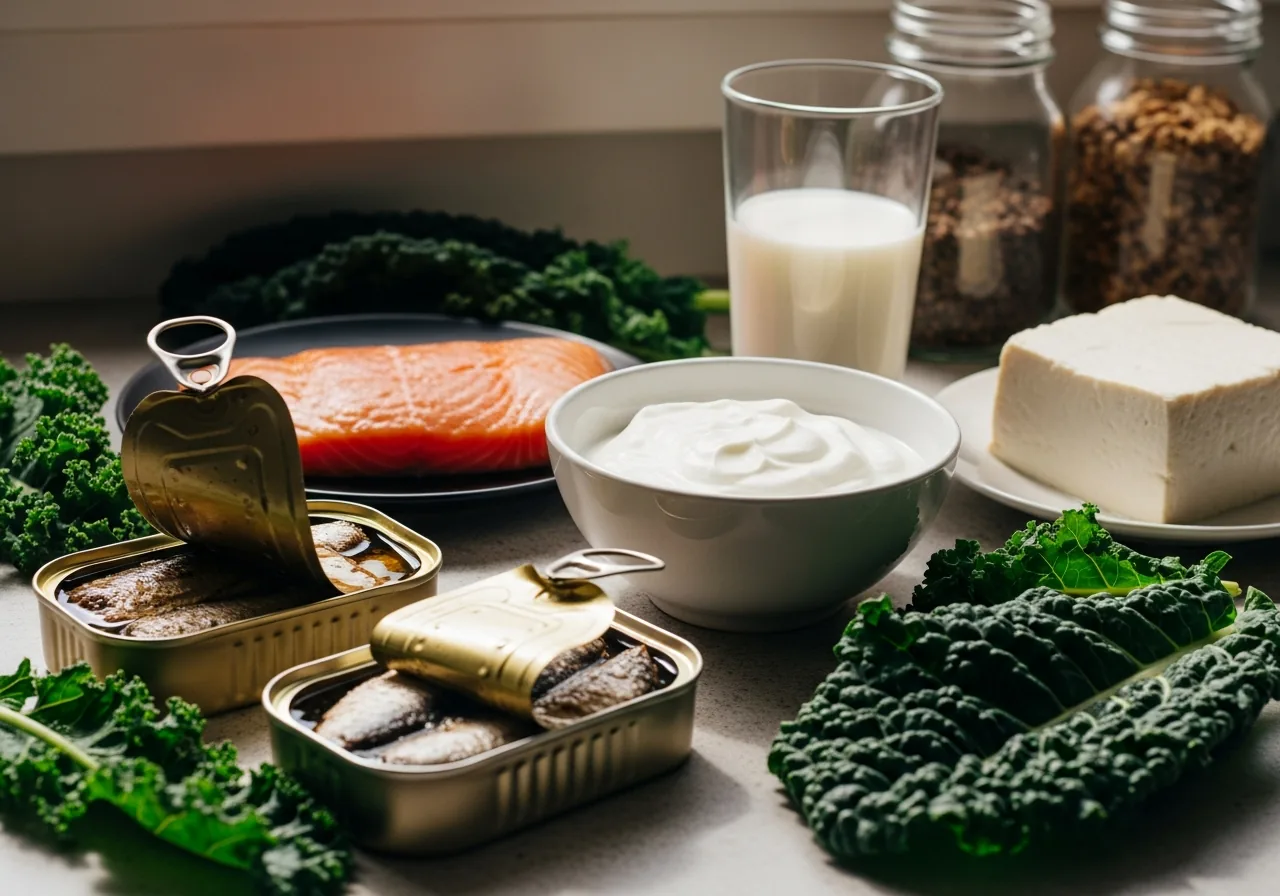
Sardines
Nutrition Facts
Per 100 g, edible portion · values per 100 g
Calories
208
| Total Fat | 11.45 g |
|---|---|
| Saturated Fat | 1.53 g |
| Sodium | 307 mg |
| Potassium | 397 mg |
| Total Carbohydrate | 0 g |
| Dietary Fiber | 0 g |
| Total Sugars | 0 g |
| Protein | 24.62 g |
Omega-3, calcium (with bones), vitamin D, B12 (canned)
Source: USDA FoodData Central (FDC 175139)
Salmon (Atlantic)
Nutrition Facts
Per 100 g, edible portion · values per 100 g
Calories
197
| Total Fat | 13.1 g |
|---|---|
| Saturated Fat | 2.28 g |
| Sodium | 49.5 mg |
| Potassium | 378 mg |
| Total Carbohydrate | 0 g |
| Dietary Fiber | 0 g |
| Total Sugars | 0 g |
| Protein | 20.3 g |
Omega-3 EPA & DHA, vitamin D, vitamin B12, selenium
Source: USDA FoodData Central (FDC 2684441); sugars: FDC 175167
Greek Yogurt (plain, nonfat)
Nutrition Facts
Per 100 g, edible portion · values per 100 g
Calories
61
| Total Fat | 0.37 g |
|---|---|
| Saturated Fat | 0.11 g |
| Sodium | 36 mg |
| Potassium | 141 mg |
| Total Carbohydrate | 3.64 g |
| Dietary Fiber | 0 g |
| Total Sugars | 3.2 g |
| Protein | 10.3 g |
Calcium, vitamin B12, probiotics, iodine
Glycemic index: 11
Source: USDA FoodData Central (FDC 330137)
Skim Milk
Nutrition Facts
Per 100 g · values per 100 g
Calories
34
| Total Fat | 0.08 g |
|---|---|
| Saturated Fat | 0.06 g |
| Sodium | 42 mg |
| Potassium | 156 mg |
| Total Carbohydrate | 4.96 g |
| Dietary Fiber | 0 g |
| Total Sugars | 5.09 g |
| Protein | 3.37 g |
Calcium, protein, vitamin B12, iodine
Source: USDA FoodData Central (FDC 171269)
Tofu
Nutrition Facts
Per 100 g, edible portion · values per 100 g
Calories
144
| Total Fat | 8.72 g |
|---|---|
| Saturated Fat | 1.26 g |
| Sodium | 14 mg |
| Potassium | 237 mg |
| Total Carbohydrate | 2.78 g |
| Dietary Fiber | 2.3 g |
| Total Sugars | 0.4 g |
| Protein | 17.3 g |
Calcium, manganese, selenium, isoflavones
Glycemic index: 15
Source: USDA FoodData Central (FDC 172475, Tofu raw firm prepared with calcium sulfate)
Kale
Nutrition Facts
Per 100 g, edible portion · values per 100 g
Calories
35
| Total Fat | 1.49 g |
|---|---|
| Saturated Fat | 0.18 g |
| Sodium | 53 mg |
| Potassium | 348 mg |
| Total Carbohydrate | 4.42 g |
| Dietary Fiber | 4.1 g |
| Total Sugars | 0.99 g |
| Protein | 2.92 g |
Vitamin K, vitamin A, vitamin C, lutein
Glycemic index: 15
Source: USDA FoodData Central (FDC 323505)
Practical takeaways
Focus on consistency, variety and the overall dietary pattern. Smaller daily choices tend to outperform occasional large changes.
Common questions
Is one compound enough? Rarely. Whole foods and dietary patterns usually outperform single-compound strategies.
How fast can diet change inflammation or blood markers? It depends on the marker, the starting diet and lifestyle factors. Expect gradual trends rather than overnight shifts.