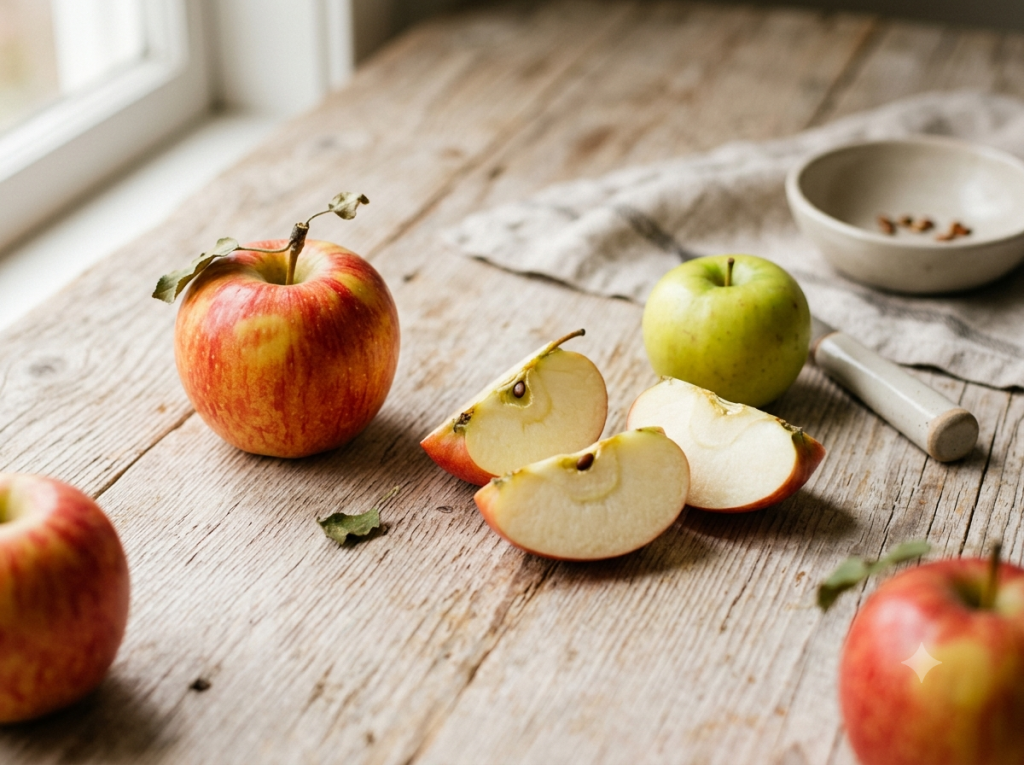
Apples are the most widely consumed fruit in the temperate world, and their reputation is backed by a simple, robust nutrient profile: roughly 2.4 g of fibre per 100 g, vitamin C, potassium and a broad mix of polyphenols — especially quercetin and epicatechin. That combination is why apples appear in research on heart health and weight management.
Compounds & anti-nutrients in Apple
Per 100 g, Apple is a notable dietary source of these active compounds. Tap any to see its full sources map and how to work with it.
Why apples are good for you
Apples’ fibre content is mostly pectin, a soluble fibre that lowers LDL cholesterol and feeds beneficial colonic bacteria. The polyphenols are concentrated in the skin, which is why eating unpeeled apples matters. Quercetin has anti-inflammatory and antihistamine effects, and epidemiological studies consistently link higher apple intake with lower cardiovascular mortality — though the evidence is associational, not causal.
Apple nutrition at a glance
The label shows the numbers, but the practical message is that apples are a portable, low-calorie snack with a genuinely useful fibre-to-sugar ratio. An apple with a handful of almonds is one of the simplest evidence-aligned snacks available.
How to buy and use apples
Choose firm, unblemished apples with no soft spots. Store in the fridge for longest freshness. Eat them whole, slice them into salads with spinach and olive oil, bake them with cinnamon and oats for a dessert, or stew them into a compote with ginger. Keep the skin on for the polyphenols and fibre.
Common questions
Do apples really keep the doctor away? The epidemiology is suggestive: higher apple intake is linked to lower cardiovascular mortality, but confounding is likely. Apples are useful as part of a broader healthy diet.
Should I eat the skin? Yes — most of the polyphenols and half the fibre are in the skin.
Explore by health goal
Apple is one of many foods that support these goals: