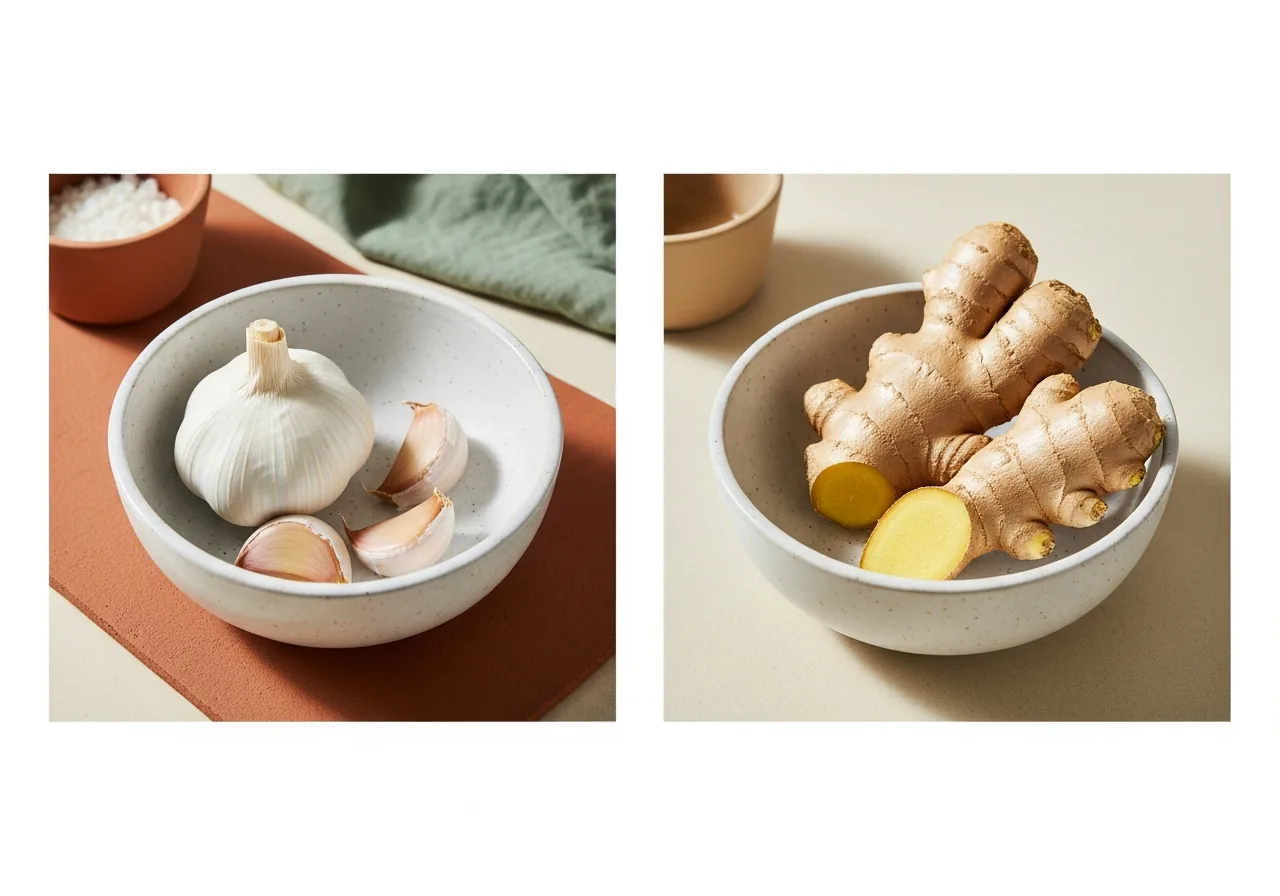
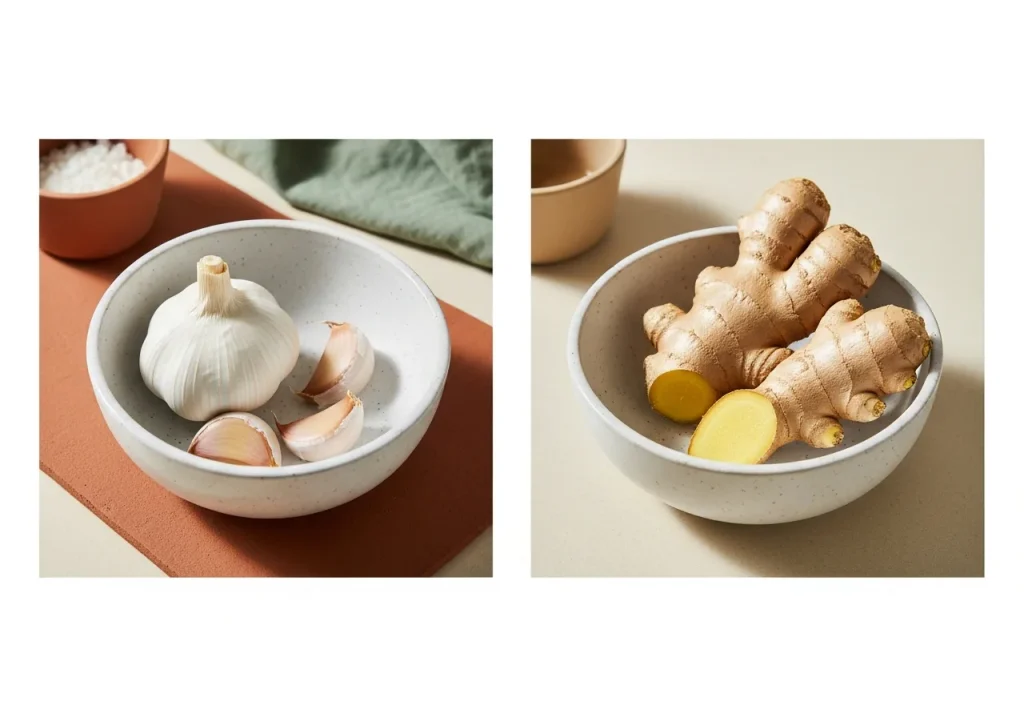
The nutrition table below is the least interesting thing about this comparison. Garlic and ginger are eaten by the clove and the slice — a few grams at a time — so per-100 g figures overstate what either actually contributes to a day’s intake. What matters is their active compounds, and those are entirely different: allicin in garlic, gingerol in ginger.
| Nutrient | Garlic | Ginger |
|---|---|---|
| Calories | 143 kcal | 80 kcal |
| Protein | 6.62 g ✓ | 1.82 g |
| Total Carbohydrate | 28.2 g | 17.8 g |
| Dietary Fiber | 2.7 g ✓ | 2 g |
| Total Sugars | 1 g ✓ | 1.7 g |
| Total Fat | 0.38 g | 0.75 g |
| Saturated Fat | 0.1 g ✓ | 0.2 g |
| Sodium | 17 mg | 13 mg ✓ |
Notable compounds in each
When to choose each
Garlic’s allicin is not present in the intact clove. It forms when garlic is crushed or chopped and the enzyme alliinase meets its substrate, which is why recipes that call for resting crushed garlic for a few minutes before heating are not being fussy. Heat deactivates the enzyme, so garlic added whole to a long braise delivers flavour but little allicin.
Ginger’s gingerol is more heat-stable and converts to shogaol when dried or cooked — related compounds with a sharper flavour. Ginger has the better evidence base for nausea specifically, including pregnancy-related nausea and motion sickness. Neither is a substitute for the other in cooking or in effect, and using both is the norm across most of the cuisines that rely on them.
Common questions
Is garlic or ginger better for inflammation? Both are studied for it and neither has decisive evidence over the other at culinary doses. Ginger has the stronger evidence base for nausea specifically. Treat both as useful parts of a varied diet rather than as treatments.
Should I crush garlic before cooking it? Yes, if allicin is what you are after. It forms only when the clove is damaged, and the enzyme responsible is destroyed by heat — so crushing and letting it stand for a few minutes before it hits the pan preserves more of it than adding cloves whole.