Black pepper is the world’s most traded spice, and its active compound piperine is the reason it appears in almost every traditional medicine system. Piperine improves the bioavailability of curcumin by around 2000%, which is why black pepper is always paired with turmeric, and it also has independent anti-inflammatory and digestive effects.
Compounds & anti-nutrients in Black Pepper
Per 100 g, Black Pepper is a notable dietary source of these active compounds. Tap any to see its full sources map and how to work with it.
Why black pepper is good for you
Piperine inhibits hepatic glucuronidation, the same metabolic pathway that limits curcumin and some other polyphenols. That bioavailability effect is why piperine is standard in curcumin supplements. Black pepper also stimulates gastric acid secretion and pancreatic enzyme production, which is why it aids digestion of heavy meals. Nutritionally, it supplies manganese, vitamin K and small amounts of iron and fibre.
Black pepper nutrition at a glance
The label shows the numbers, but the practical message is that black pepper is a free bioavailability multiplier: a pinch of ground pepper with turmeric, green tea or fat-soluble vitamins dramatically increases absorption. It also adds flavour without calories.
How to buy and use black pepper
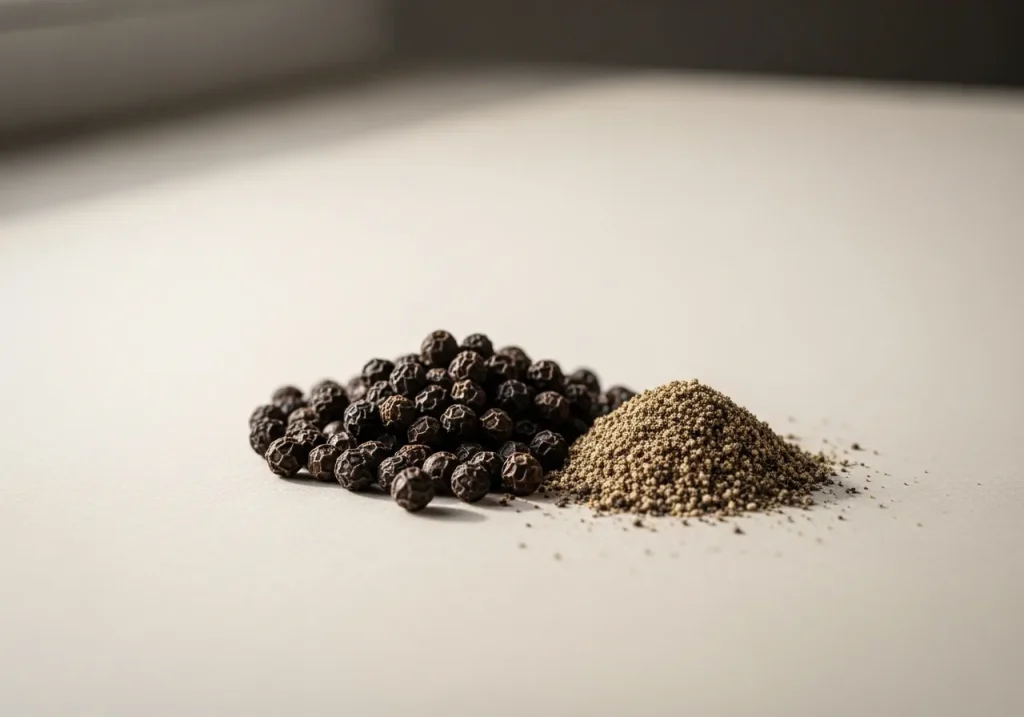
Buy whole pepper corns and grind fresh for the best flavour and piperine content; pre-ground pepper loses volatile oils quickly. Store in an airtight container away from light. Use black pepper in almost every savoury dish, but especially with turmeric, garlic and fatty foods. A pinch of black pepper with olive oil and turmeric is the most evidence-aligned kitchen habit.
Common questions
Does black pepper really help turmeric? Yes — piperine increases curcumin bioavailability by around 2000%, which is why traditional recipes always combine the two.
Is black pepper good for digestion? Yes — piperine stimulates gastric acid and pancreatic enzymes, supporting digestion of heavy or fatty meals.
Explore by health goal
Black Pepper is one of many foods that support these goals: