
Black Bean & Edamame Tacos
Spiced black beans and edamame in warm corn tortillas with cabbage slaw and lime crema. Fifteen grams of fiber per serving.
Spiced black beans and edamame in warm corn tortillas with cabbage slaw and lime crema. Fifteen grams of fiber per serving.
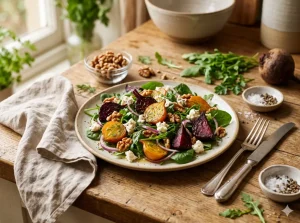
Roasted beetroot with bitter leaves, toasted walnuts and feta, dressed in olive oil and balsamic. Dietary nitrates meet omega-3 ALA.
Across 22 randomised trials, beetroot juice lowered systolic blood pressure by about 3.6 mmHg and diastolic by 1.3 mmHg, more so in trials lasting two weeks or longer. Larger juice doses lowered it more, but juices higher in nitrate did not, suggesting nitrate is not the whole story.

One of the most studied spices for blood-sugar regulation, cinnamon’s cinnamaldehyde and procyanidins improve insulin sensitivity in people with metabolic syndrome.
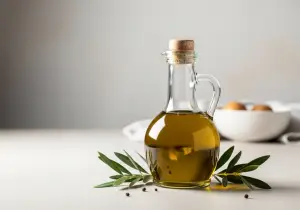
The cornerstone fat of the Mediterranean diet, with monounsaturated fat and polyphenols supported by the PREDIMED trial.

High-cocoa chocolate is genuinely rich in minerals and flavanols linked to blood pressure and cognition — in modest portions.
A Mediterranean diet supplemented with extra virgin olive oil or nuts cut major cardiovascular events by about 30% compared with a control group advised to reduce dietary fat. The original 2013 report was withdrawn over randomisation problems; this 2018 reanalysis reached the same conclusion.
Over eight weeks, a diet rich in fruit, vegetables and low-fat dairy, with less saturated and total fat, lowered blood pressure by 5.5/3.0 mmHg more than a typical American diet, and by 11.4/5.5 mmHg in people with hypertension. Sodium intake and body weight were held constant.
Comparing people who ate the most dietary fibre with those who ate the least, observational studies found 15–30% lower rates of death from all causes and from cardiovascular disease, and of coronary heart disease, stroke, type 2 diabetes and colorectal cancer, with the greatest benefit at 25–29 g a day. Trials showed lower body weight, blood pressure and cholesterol with more fibre.
One cup of blueberries a day for six months improved blood-vessel function and arterial stiffness in adults with metabolic syndrome, and raised HDL cholesterol in those not taking statins. Insulin resistance, the main outcome, did not change, and half a cup a day had no effect.
In two large US cohorts of nurses and other health professionals, followed for up to 30 years, people who ate nuts seven or more times a week had a 20% lower death rate than those who ate none, after adjusting for other risk factors. This is an association, not proof of cause, and the study was part-funded by the International Tree Nut Council.
Daily omega-3 supplements (1 g) did not lower major cardiovascular events or invasive cancer compared with placebo over a median of 5.3 years. Among the secondary outcomes, heart attacks were lower (hazard ratio 0.72), but stroke and cardiovascular death were not.