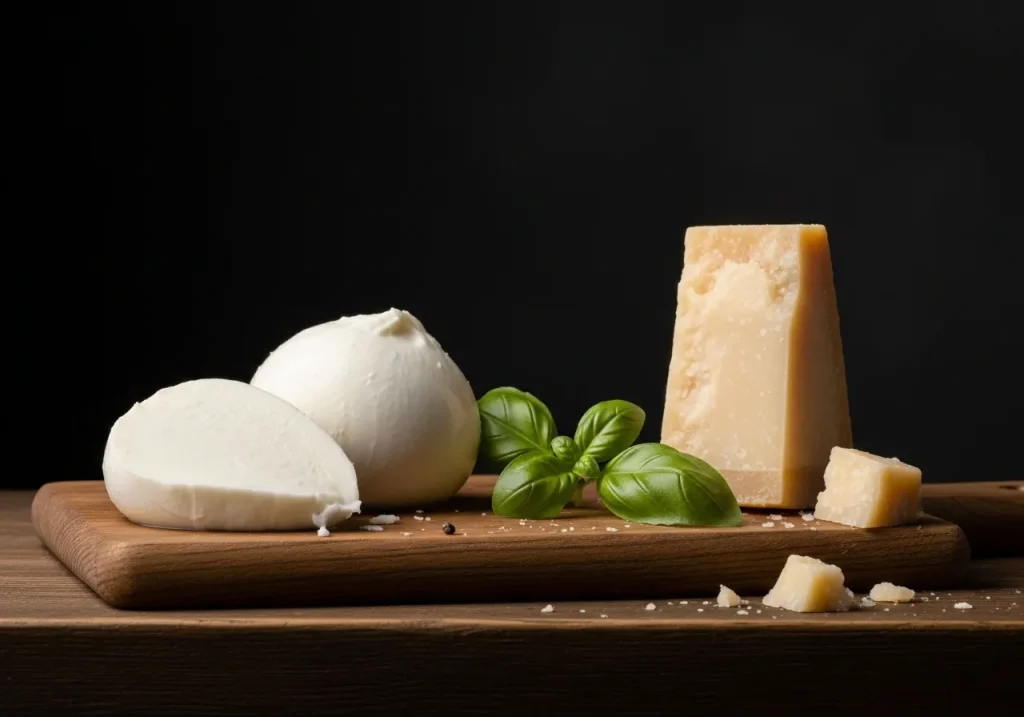
Mozzarella and parmesan are two of the most-used Italian cheeses in the world, made and used in almost opposite ways.
| Nutrient | Mozzarella | Parmesan |
|---|---|---|
| Calories | 299 kcal | 392 kcal |
| Protein | 22.2 g | 35.75 g ✓ |
| Total Carbohydrate | 2.4 g | 3.22 g |
| Dietary Fiber | 0 g | 0 g |
| Total Sugars | 0 g ✓ | 0.11 g |
| Total Fat | 22.1 g | 25 g |
| Saturated Fat | 13.9 g ✓ | 14.85 g |
| Sodium | 486 mg ✓ | 1175 mg |
Notable compounds in each
When to choose each
Parmesan is dramatically more protein-dense, over 60% more than mozzarella per 100g, but that comes at a steep sodium cost: parmesan carries more than double mozzarella’s sodium, again down to its long, salt-heavy ageing process. Mozzarella is the milder, more moderate everyday melting cheese (pizza, caprese); parmesan is almost always used in small grated amounts as a finishing touch rather than eaten in equivalent quantities, which limits its real-world sodium impact.
Common questions
Why is mozzarella lower in sodium than most hard cheeses? It’s a fresh, young cheese, eaten within days to weeks of being made, so it hasn’t gone through the long salting and ageing process that concentrates sodium in cheeses like parmesan or aged cheddar.
Is parmesan the most protein-dense cheese? It’s among the highest, around 36g per 100g, well ahead of most cheeses on this site, though because it’s typically used in small grated amounts, its practical contribution to daily protein intake is usually modest despite the impressive per-100g number.