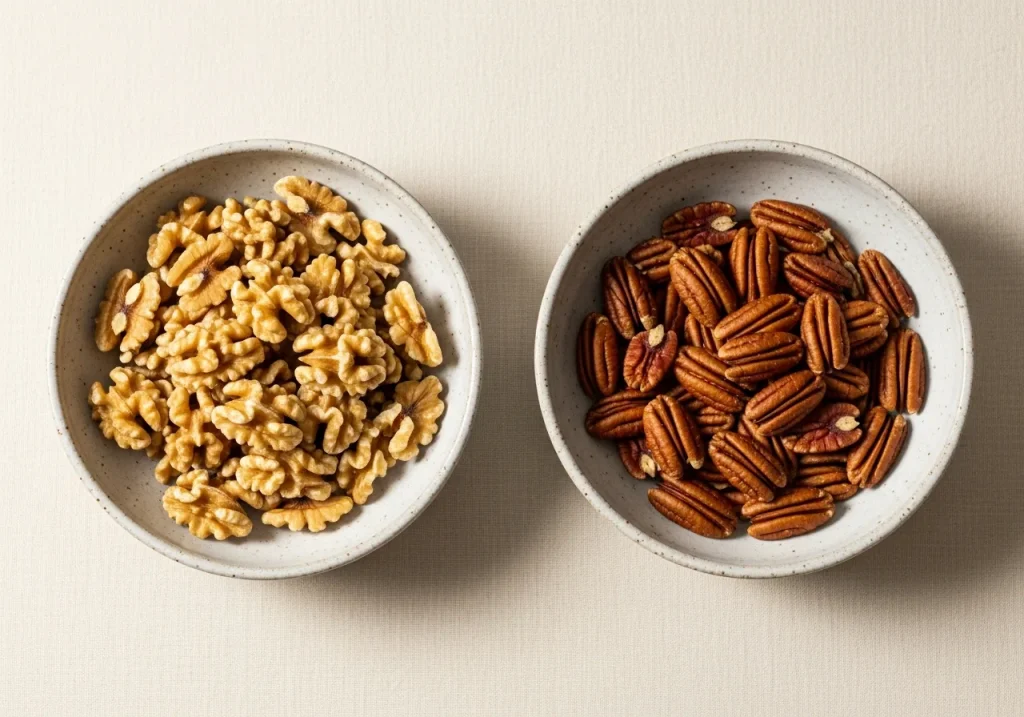
These two are closer than almost any other pair on the site, with one real difference: protein. Walnuts carry 14.6 g per 100 g against pecans’ 10 g — about half as much again. Calories are nearly the same (730 against 750), as is fibre (5.2 g against 5.8 g), and both are around 70% fat by weight.
The other difference does not show in the table at all: walnuts are the notable nut source of plant omega-3, and pecans are not. If you are choosing between them on nutrition rather than taste, that and the protein are the whole argument.
| Nutrient | Walnuts | Pecans |
|---|---|---|
| Calories | 730 kcal | 750 kcal |
| Protein | 14.6 g ✓ | 9.96 g |
| Total Carbohydrate | 10.9 g | 12.7 g |
| Dietary Fiber | 5.21 g | 5.79 g ✓ |
| Total Sugars | 2.61 g ✓ | 3.97 g |
| Total Fat | 69.7 g | 73.3 g |
| Saturated Fat | 6.05 g ✓ | 6.46 g |
| Sodium | 0 mg | 0 mg |
Notable compounds in each
When to choose each
Reach for walnuts if you want either more protein or plant omega-3 — they are the only common nut that supplies the latter in quantity. Reach for pecans when the flavour is the point: they are sweeter and softer, which is why they end up in baking where walnuts would taste tannic. Nutritionally you are not giving much up either way.
Walnuts vs pecans nutrition per 100g
Both raw and unsalted, both among the most calorie-dense foods in the database. A 30 g handful is roughly 220 calories of walnuts or 225 of pecans — near enough identical.
Walnuts hold slightly more potassium, 424 mg against 360 mg. Everything else in the table is within a rounding error of the other, which is unusual and worth knowing if you were expecting one to be clearly lighter.
Common questions
Are walnuts or pecans healthier? Walnuts, on balance — more protein and meaningfully more plant omega-3 for the same calories. Pecans are not an unhealthy choice; they are simply a nut you would pick for flavour rather than for what it adds nutritionally.
Which has more calories, walnuts or pecans? Pecans, marginally: 750 calories per 100 g against 730. The difference is too small to be worth choosing on.
Can you substitute pecans for walnuts? In baking, almost always — they have similar texture and fat content. The flavour shifts sweeter and less bitter, which usually works in a dessert and less well in a savoury dish where walnut’s edge is doing something.
Do pecans have omega-3? Very little. Walnuts are the standout among common nuts for alpha-linolenic acid; pecans, like most nuts, are mainly monounsaturated fat.