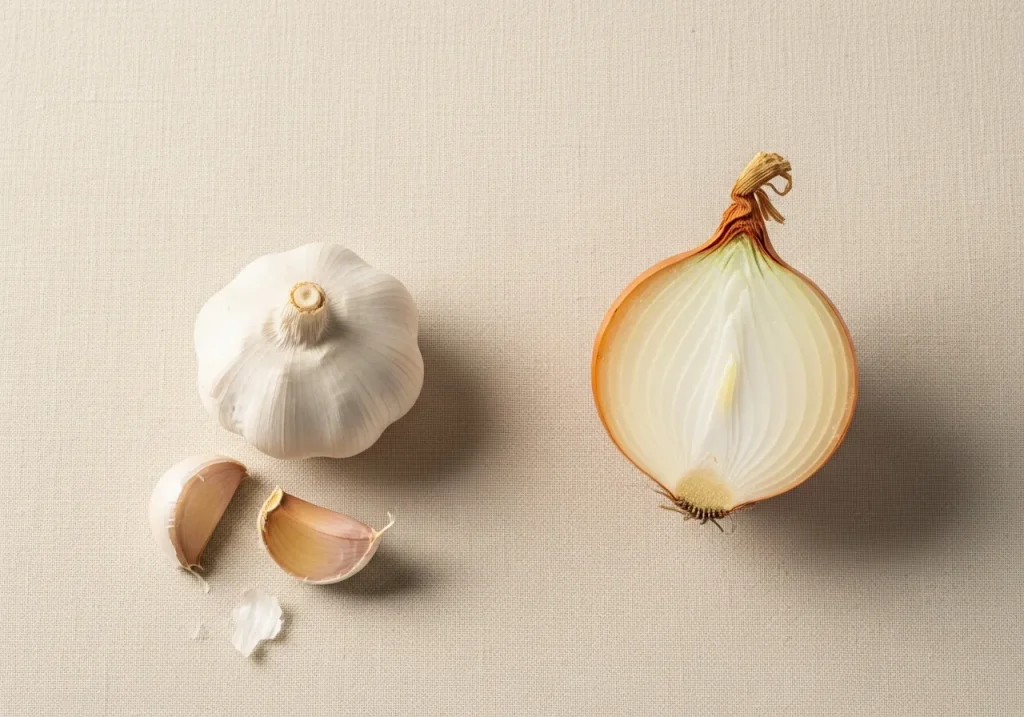
Garlic and onion are the two aromatics that start more recipes than almost anything else, and while they’re used together constantly, they’re not nutritionally identical — and each has its own well-studied compound profile.
| Nutrient | Garlic | Onion |
|---|---|---|
| Calories | 143 kcal | 44 kcal |
| Protein | 6.62 g ✓ | 0.94 g |
| Total Carbohydrate | 28.2 g | 9.93 g |
| Dietary Fiber | 2.7 g ✓ | 2.2 g |
| Total Sugars | 1 g ✓ | 4.24 g |
| Total Fat | 0.38 g | 0.1 g |
| Saturated Fat | 0.1 g | 0.042 g ✓ |
| Sodium | 17 mg | 1 mg ✓ |
Notable compounds in each
When to choose each
Reach for garlic for its concentrated allicin content, the sulphur compound behind much of its studied cardiovascular and antimicrobial research, plus more protein and fibre gram for gram — though it’s typically eaten in much smaller quantities than onion. Reach for onion for a milder, more volume-friendly aromatic that forms the base of far more dishes. Both are notable sources of fructans and FODMAPs, worth knowing if you’re following a low-FODMAP approach.
Common questions
Why do garlic and onion both cause digestive issues for some people? Both are among the highest-FODMAP foods commonly eaten, specifically for their fructan content, which some people with IBS or FODMAP sensitivity find triggers bloating or discomfort.
Does cooking destroy garlic’s allicin? Significantly, yes — allicin is heat-sensitive and largely breaks down during cooking. Crushing or chopping raw garlic and letting it sit for a few minutes before cooking helps preserve more of it.