Oats carry more fibre; quinoa carries more protein, more potassium and better protein quality. Per 100 g dry, oats give 10.1 g of fibre to quinoa’s 7 g, while quinoa returns 14.1 g of protein to 13.2 g. Quinoa also answers with 563 mg of potassium against 362 mg, and a complete amino acid profile that oats do not quite match. Calories are close, 379 against 368.
The fibre gap is the one that has a specific mechanism behind it: a large share of oat fibre is beta-glucan, the soluble fibre with a solid evidence base for lowering LDL cholesterol. Quinoa’s fibre is mostly insoluble and does a different job.
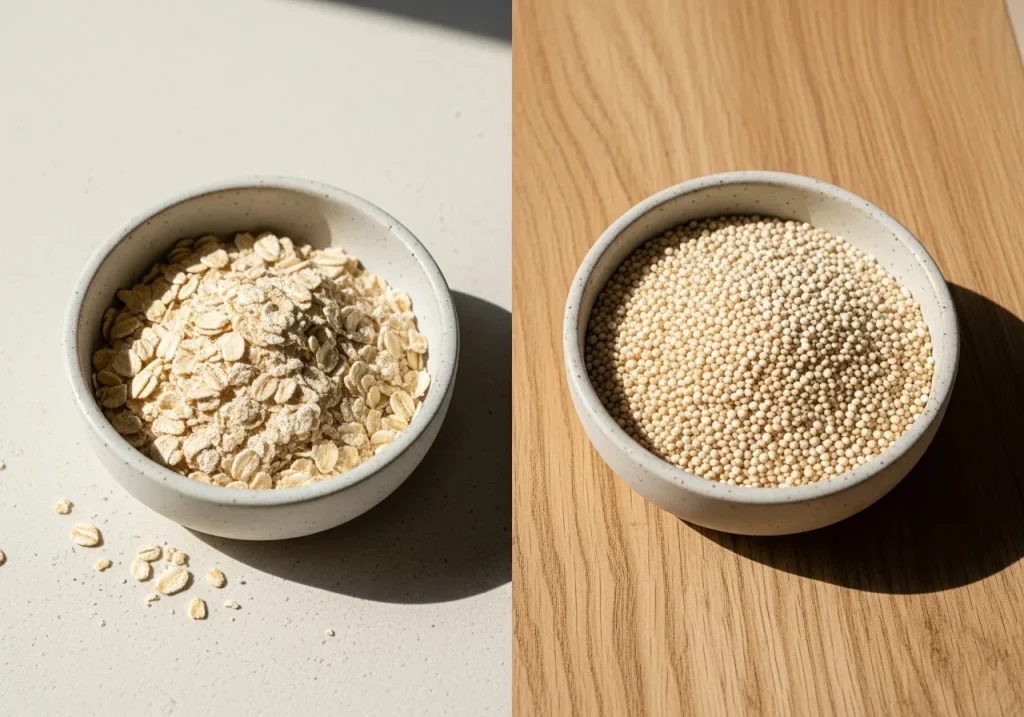
| Nutrient | Oats | Quinoa |
|---|---|---|
| Calories | 379 kcal | 368 kcal |
| Protein | 13.15 g | 14.12 g ✓ |
| Total Carbohydrate | 67.7 g | 64.16 g |
| Dietary Fiber | 10.1 g ✓ | 7 g |
| Total Sugars | 0.99 g | — |
| Total Fat | 6.52 g | 6.07 g |
| Saturated Fat | 1.11 g | 0.71 g ✓ |
| Sodium | 6 mg | 5 mg ✓ |
Notable compounds in each
When to choose each
Reach for oats for fibre, for beta-glucan specifically, and for cost — they are among the cheapest sources of either. Reach for quinoa when you want a savoury base rather than a porridge, more potassium, or a complete protein in a meal that has no animal foods in it. Both are whole grains eaten dry-weight and both roughly triple in volume when cooked.
Oats vs quinoa nutrition per 100g
⚠️ Per 100 g dry for both. A normal 40–50 g serving of oats is 150–190 calories, not 379 — the per-100 g figure is roughly two and a half portions.
They also occupy different meals in practice, which is most of why people compare them: oats are a breakfast grain and quinoa a lunch or dinner one. Nutritionally there is no reason they could not swap.
Common questions
Is quinoa or oatmeal better for breakfast? Oats give you more fibre, including beta-glucan, and cost less. Quinoa gives you more potassium and a complete protein. For a breakfast where the point is fibre, oats have the stronger case.
Which has more protein, oats or quinoa? Quinoa, marginally: 14.1 g per 100 g dry against 13.2 g. Quinoa’s protein is also of higher quality, containing all the essential amino acids in useful amounts.
Do oats have more fibre than quinoa? Yes — 10.1 g per 100 g against 7 g, and a large part of it is beta-glucan, the soluble fibre with the cholesterol evidence behind it.
Are oats gluten free? Oats themselves contain no gluten, but they are very often processed alongside wheat and get cross-contaminated. If you need to avoid gluten, look for oats specifically labelled gluten free. Quinoa is naturally gluten free.