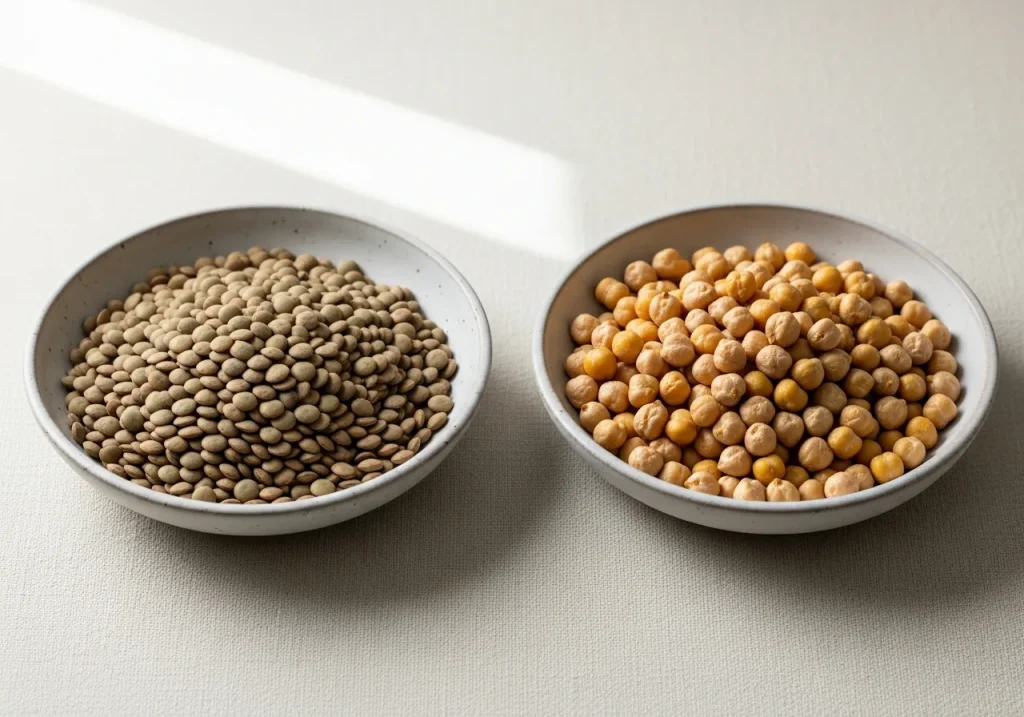
Lentils lead on protein and are far lower in fat; chickpeas lead on fibre and potassium. Per 100 g dry, lentils carry 23.6 g of protein to chickpeas’ 21.3 g and just 1.92 g of fat against 6.27 g. Chickpeas come back with 10.8 g of fibre to 7.9 g, and 1,070 mg of potassium against 949 mg — both among the highest potassium figures in the database.
The practical difference is cooking time. Lentils need no soaking and cook in 20–30 minutes; dried chickpeas want an overnight soak and an hour or more after that, which is why chickpeas are the ones most people buy tinned.
| Nutrient | Lentils | Chickpeas |
|---|---|---|
| Calories | 360 kcal | 383 kcal |
| Protein | 23.6 g ✓ | 21.3 g |
| Total Carbohydrate | 62.2 g | 60.4 g |
| Dietary Fiber | 7.9 g | 10.8 g ✓ |
| Total Sugars | 1.8 g ✓ | 10.8 g |
| Total Fat | 1.92 g | 6.27 g |
| Saturated Fat | 0.05 g ✓ | 0.69 g |
| Sodium | 0 mg ✓ | 8.78 mg |
Notable compounds in each
When to choose each
Reach for lentils when protein per calorie is the goal, when you want almost no fat, or when you have not planned ahead — they cook from dry in half an hour. Reach for chickpeas for more fibre and potassium, and for their firmer texture, which holds up in a salad or a roasting tin where lentils collapse.
Lentils vs chickpeas nutrition per 100g
⚠️ Per 100 g dry. Both roughly double to triple in weight when cooked, so a cooked 100 g portion is nearer 115–165 calories rather than the 360–383 above. Tinned pulses are already cooked and land in that lower range.
Chickpeas’ higher fat is what gives hummus its texture without much added oil. Their sugar figure is also higher, and it is the oligosaccharides that pulses are known for — which is the usual reason people find them hard to digest at first.
Common questions
Which is healthier, lentils or chickpeas? Lentils for protein and low fat, chickpeas for fibre and potassium. Both are among the most nutrient-dense cheap foods available and there is no reason to pick just one.
Do lentils have more protein than chickpeas? Yes, slightly — 23.6 g per 100 g dry against 21.3 g. Lentils also carry roughly a third of the fat.
How many calories are in cooked lentils? Around 115–120 per 100 g cooked. The 360 figure above is dry weight, and lentils roughly triple in weight as they absorb water.
Why do beans and lentils cause gas? They contain oligosaccharides, a type of carbohydrate people cannot digest, which gut bacteria ferment instead. It usually eases as you eat them more regularly. Soaking, rinsing tinned pulses well and introducing them gradually all help.