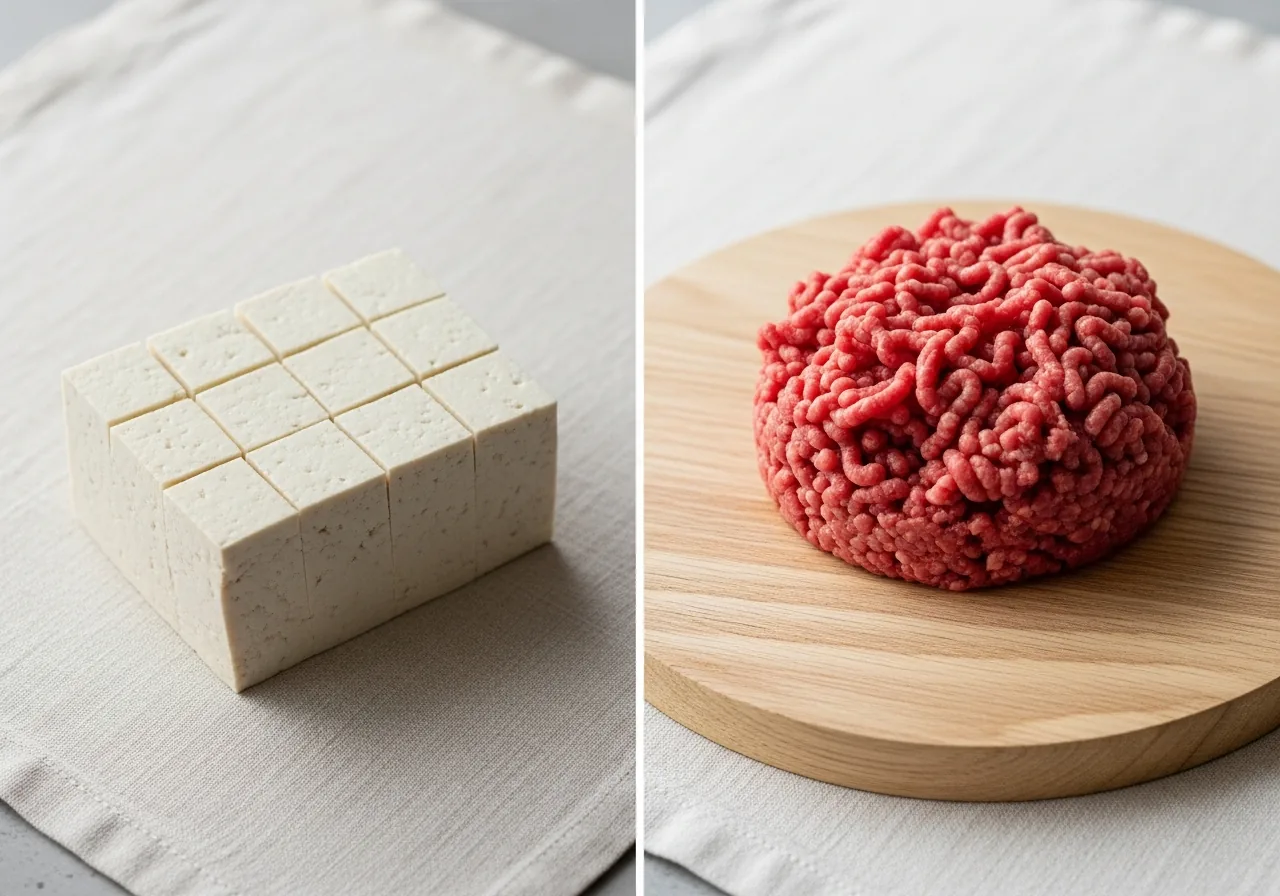
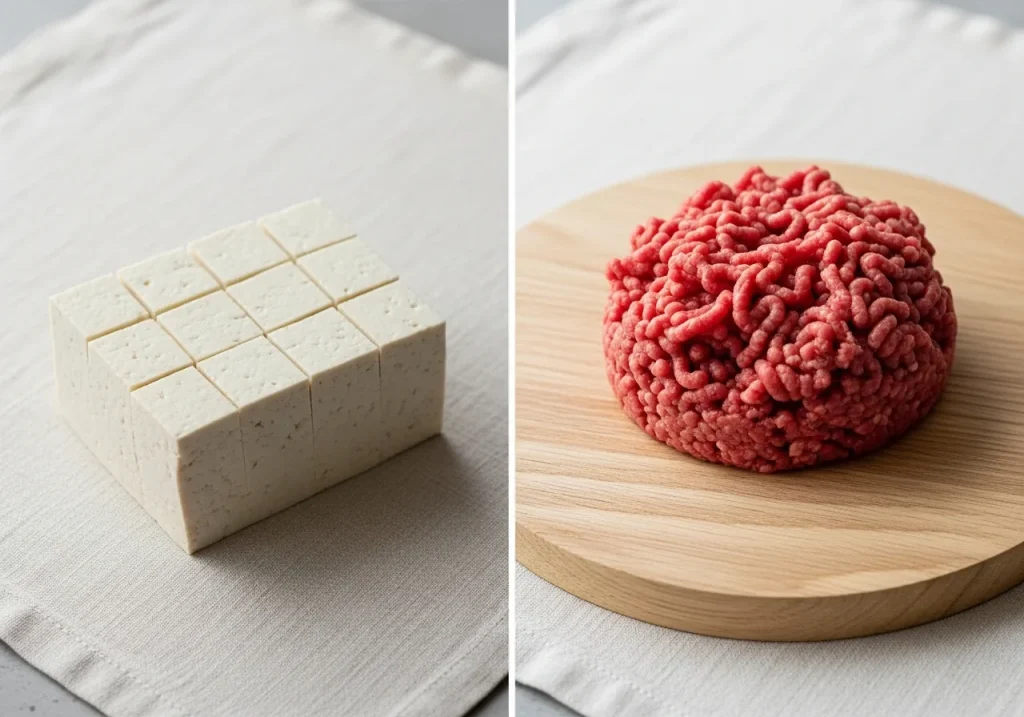
Closer than expected on calories, further apart on what comes with them. Tofu and 95% lean beef land within 7 kcal of each other (144 against 137 per 100 g). Beef carries more protein (21.4 g against 17.3 g) plus heme iron, zinc and vitamin B12 in forms the body absorbs readily. Tofu carries less saturated fat, some fibre, calcium and isoflavones — and no B12 at all.
| Nutrient | Tofu | Lean Beef (95% lean) |
|---|---|---|
| Calories | 144 kcal | 137 kcal |
| Protein | 17.3 g | 21.4 g ✓ |
| Total Carbohydrate | 2.78 g | 0 g |
| Dietary Fiber | 2.3 g ✓ | 0 g |
| Total Sugars | 0.4 g | 0 g ✓ |
| Total Fat | 8.72 g | 5 g |
| Saturated Fat | 1.26 g ✓ | 2.18 g |
| Sodium | 14 mg ✓ | 66 mg |
Notable compounds in each
When to choose each
Beef’s advantage is micronutrient bioavailability rather than protein quantity. Heme iron is absorbed several times more efficiently than the non-heme iron in plants, and vitamin B12 is not present in tofu in any meaningful amount — anyone eating mostly plant protein needs a reliable B12 source elsewhere.
Tofu’s advantage is what it leaves out and what it adds. It carries about 40% less saturated fat, brings 2.3 g of fibre where beef has none, and when set with calcium sulfate is a genuine calcium source. Soy is a complete protein, containing all nine essential amino acids, so the old worry about “incomplete” plant protein does not apply here. Both fit in the same diet.
Common questions
Does tofu have as much protein as beef? Not quite — 17.3 g per 100 g against 21.4 g for 95% lean beef, so beef is about 24% higher. Both are substantial protein sources at similar calorie counts.
Is tofu a complete protein? Yes. Soy contains all nine essential amino acids in useful amounts, which makes tofu one of the few plant proteins that needs no combining with another food to be complete.