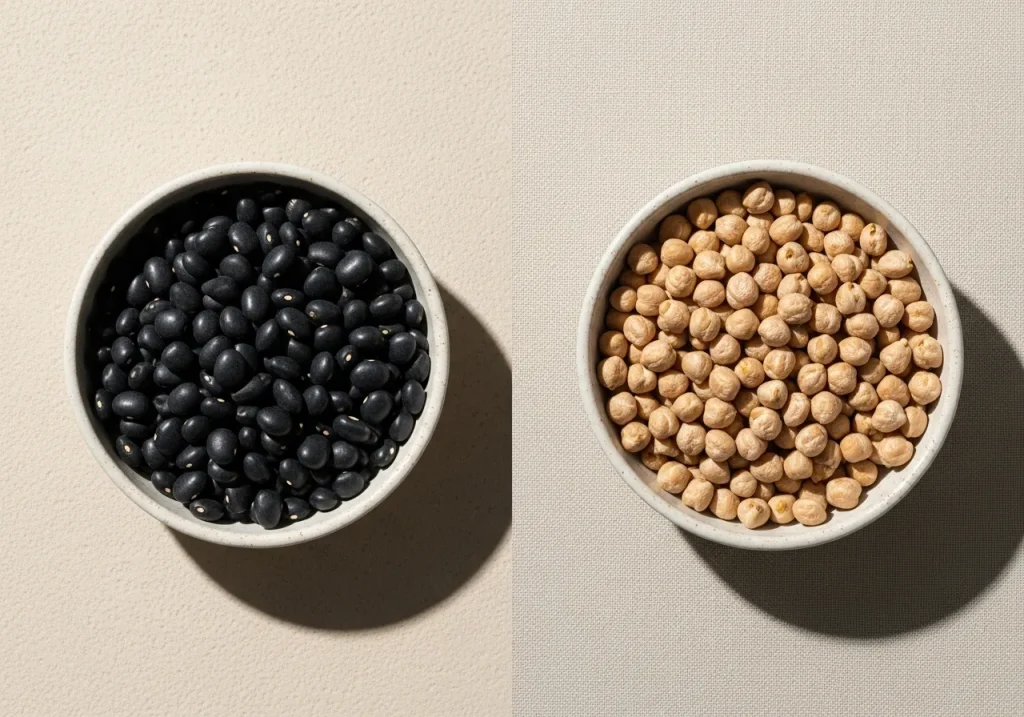
Black beans and chickpeas are two of the most versatile legumes in global cooking, equally at home in a curry, a salad or blended into a dip — and while both are excellent plant-protein staples, they lean in different directions nutritionally.
| Nutrient | Black Beans | Chickpeas |
|---|---|---|
| Calories | 341 kcal | 383 kcal |
| Protein | 21.6 g ✓ | 21.3 g |
| Total Carbohydrate | 62.36 g | 60.4 g |
| Dietary Fiber | 15.5 g ✓ | 10.8 g |
| Total Sugars | 2.12 g ✓ | 10.8 g |
| Total Fat | 1.42 g | 6.27 g |
| Saturated Fat | 0.366 g ✓ | 0.69 g |
| Sodium | 5 mg ✓ | 8.78 mg |
Notable compounds in each
When to choose each
Reach for black beans when protein and lower sugar are the priority — they carry noticeably less natural sugar than chickpeas for the same weight. Reach for chickpeas when fibre is what you’re after, along with their firmer bite and mild, slightly nutty flavour that holds up well roasted or blended into hummus. Both are notable sources of manganese, zinc and iron, and both carry phytates that soaking and thorough cooking help reduce.
Common questions
Can I swap black beans for chickpeas in a recipe? Often, yes, especially in soups, stews and salads — texture and flavour differ (chickpeas are firmer and nuttier, black beans softer and earthier), but the swap rarely breaks a dish.
Which is better for gut health? Both are strong choices — the fibre in each feeds beneficial gut bacteria, and gut health is one of the better-established benefits of a legume-rich diet generally. Chickpeas’ higher fibre count gives it a slight edge on this specific measure.