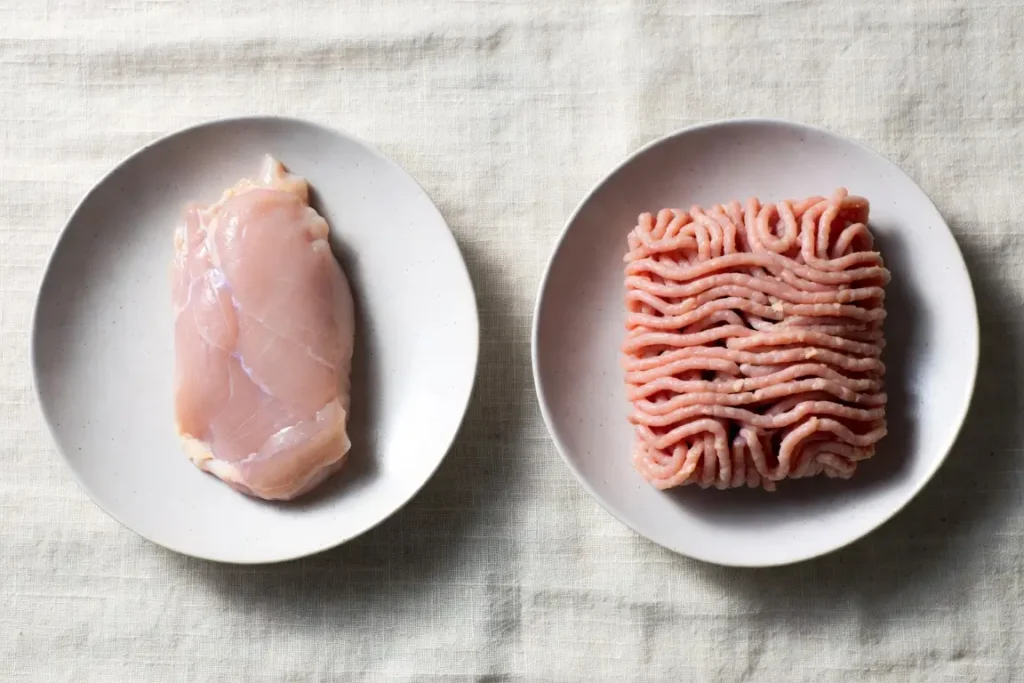
Turkey breast and ground turkey come from the same bird, but how they’re prepared changes the nutrition numbers more than you might expect.
| Nutrient | Turkey Breast | Ground Turkey |
|---|---|---|
| Calories | 114 kcal | 153 kcal |
| Protein | 23.7 g ✓ | 17.3 g |
| Total Carbohydrate | 0.14 g | 0 g |
| Dietary Fiber | 0 g | 0 g |
| Total Sugars | 0.05 g | 0 g ✓ |
| Total Fat | 1.48 g | 9.59 g |
| Saturated Fat | 0.29 g ✓ | 2.26 g |
| Sodium | 113 mg | 80.2 mg ✓ |
Notable compounds in each
When to choose each
Whole turkey breast is the leaner cut by a clear margin, meaningfully more protein and dramatically less saturated fat than ground turkey, since ground turkey is typically made from a blend of breast and darker, fattier meat, and sometimes skin, rather than pure breast meat. Ground turkey does run a touch lower in sodium and is far more versatile for mince-based cooking, burgers, bolognese, tacos, where a solid whole breast fillet doesn’t work. If leanness is the priority, check the label: “ground turkey breast” specifically, not just “ground turkey,” is much closer to whole breast’s numbers.
Common questions
Is ground turkey as lean as turkey breast? Not usually – standard ground turkey often includes darker meat and sometimes skin, which raises the fat content well above a plain turkey breast fillet. Ground turkey breast, labelled specifically as breast meat only, is the leaner alternative if you want ground turkey with fat closer to whole breast’s numbers.
Why does ground turkey have more fat than turkey breast? It’s usually a blend of white and dark meat, and sometimes skin, ground together, rather than pure breast meat – dark meat and skin both carry meaningfully more fat than the breast alone, which is what drives the difference.