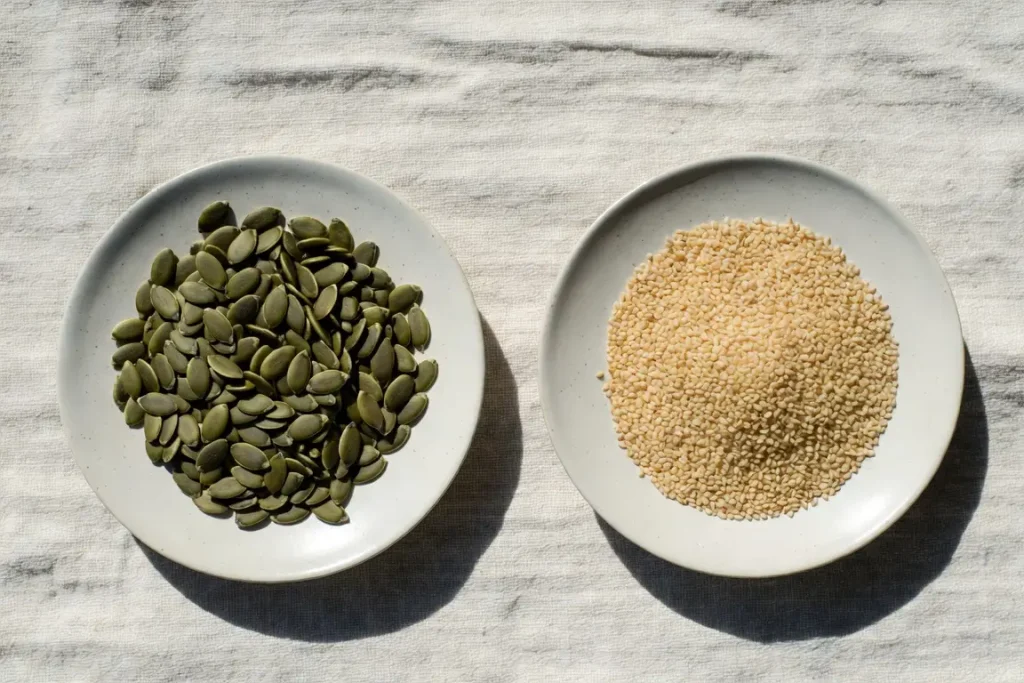
Pumpkin and sesame seeds are both small, nutrient-dense seeds built on very different nutritional strengths.
| Nutrient | Pumpkin Seeds | Sesame Seeds |
|---|---|---|
| Calories | 555 kcal | 573 kcal |
| Protein | 29.9 g ✓ | 17.7 g |
| Total Carbohydrate | 18.7 g | 23.4 g |
| Dietary Fiber | 5.08 g | 11.8 g ✓ |
| Total Sugars | 1.4 g | 0.3 g ✓ |
| Total Fat | 40 g | 49.7 g |
| Saturated Fat | 8.7 g | 6.96 g ✓ |
| Sodium | 0 mg ✓ | 11 mg |
Notable compounds in each
When to choose each
Pumpkin seeds are the clear protein winner here, nearly 30g per 100g, among the highest of any seed or nut on this site, while sesame seeds pull well ahead on fibre and run a little lower in saturated fat and sugar. Pumpkin seeds are also one of the richest plant sources of zinc and magnesium, minerals harder to find in a typical diet; sesame’s standout mineral is calcium. Both are easy, nutrient-dense additions sprinkled over salads, yoghurt or baking.
Common questions
Are pumpkin seeds a good source of zinc? Yes – pumpkin seeds are one of the richest plant sources of zinc available, which matters in particular for anyone eating a mostly plant-based diet, since plant zinc sources are generally less abundant and less absorbable than animal ones.
Which has more protein, pumpkin seeds or sesame seeds? Pumpkin seeds, by a wide margin – around 30g per 100g versus roughly 18g for sesame seeds, making pumpkin seeds one of the most protein-dense seeds available.