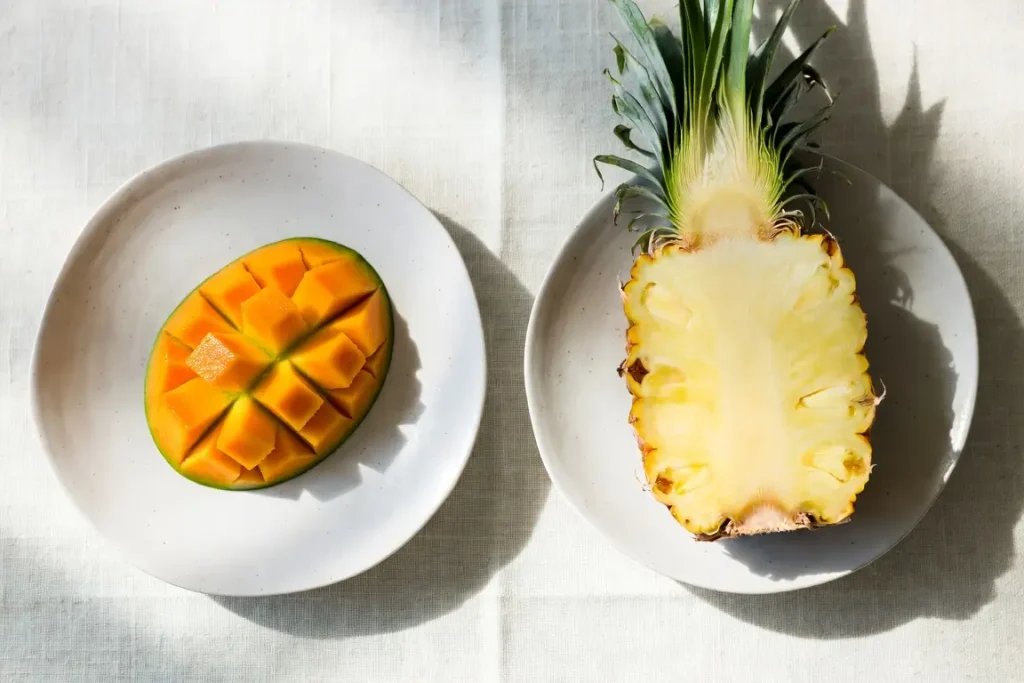
Mango and pineapple are the two tropical fruits that show up in everything from smoothies to salsas, and while both are vitamin C powerhouses, they bring different strengths to the table.
Pineapple is the lighter choice; mango is the more nutrient-dense one. Pineapple carries 60 kcal per 100 g against mango’s 78, with noticeably less sugar (9.9 g against 13.7 g). Mango repays those extra calories with substantially more vitamin A as beta-carotene, plus slightly more fibre. Watching sugar, take pineapple; after the most nutrition per mouthful, take mango.
| Nutrient | Mango | Pineapple |
|---|---|---|
| Calories | 78.5 kcal | 60.1 kcal |
| Protein | 0.69 g ✓ | 0.46 g |
| Total Carbohydrate | 17.4 g | 14.1 g |
| Dietary Fiber | 1.29 g ✓ | 0.94 g |
| Total Sugars | 13.7 g | 9.85 g ✓ |
| Total Fat | 0.68 g | 0.21 g |
| Saturated Fat | 0.092 g | 0.009 g ✓ |
| Sodium | 0 mg | 0 mg |
Notable compounds in each
When to choose each
Reach for mango for a striking amount of vitamin C – nearly triple pineapple’s per 100 g – along with more fibre and protein. Reach for pineapple for fewer calories per 100 g and its unique bromelain content, an enzyme studied for its role in protein digestion and anti-inflammatory effects. Both are excellent choices for a naturally sweet finish to a meal without reaching for processed dessert.
Common questions
Why does fresh pineapple make your mouth tingle? That’s bromelain at work – the same enzyme studied for digestion is actively breaking down proteins in your mouth’s soft tissue, which is why the sensation fades once you stop eating it.
Which is lower in sugar? Pineapple tends to run slightly lower than mango per 100 g, though both are naturally sweet fruits and neither is a “low-sugar” choice in absolute terms.
Which is healthier, mango or pineapple? Pineapple if calories or sugar are the constraint – 60 kcal per 100 g against 78, and about 30% less sugar. Mango if they are not: it carries more vitamin A, more beta-carotene and slightly more fibre.