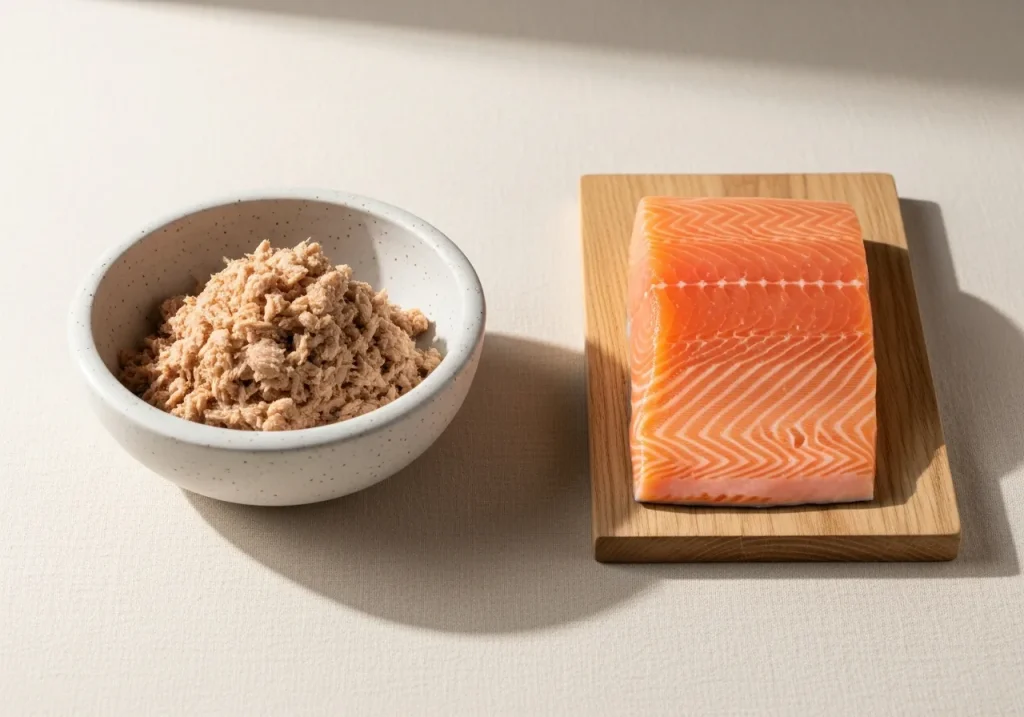
Tuna and salmon are the two fish most people reach for without thinking twice, whether from a tin or fresh off the counter — and while both are excellent protein sources, canned tuna and fresh salmon aren’t really playing the same game nutritionally.
| Nutrient | Tuna (canned, light) | Salmon (Atlantic) |
|---|---|---|
| Calories | 86 kcal | 197 kcal |
| Protein | 19.44 g | 20.3 g ✓ |
| Total Carbohydrate | 0 g | 0 g |
| Dietary Fiber | 0 g | 0 g |
| Total Sugars | 0 g | 0 g |
| Total Fat | 0.96 g | 13.1 g |
| Saturated Fat | 0.21 g ✓ | 2.28 g |
| Sodium | 247 mg | 49.5 mg ✓ |
Notable compounds in each
When to choose each
Reach for tuna when you want a lean, low-fat, budget-friendly protein source with a long shelf life — ideal for a quick lunch. Reach for salmon for substantially more omega-3 fat and a much lower sodium load, since canned tuna typically carries added salt from processing. If sodium is a specific concern, look for tuna canned in water and rinse it, which reduces the load somewhat.
Common questions
Is canned tuna as nutritious as fresh fish? For protein, yes — canning doesn’t meaningfully reduce protein content. It does add sodium and can reduce some heat-sensitive nutrients slightly compared to fresh, lightly-cooked fish.
Which has more omega-3s? Salmon, by a wide margin — it’s one of the richest oily-fish sources of omega-3s. Light tuna (used here) is a leaner fish with meaningfully less fat overall than salmon.