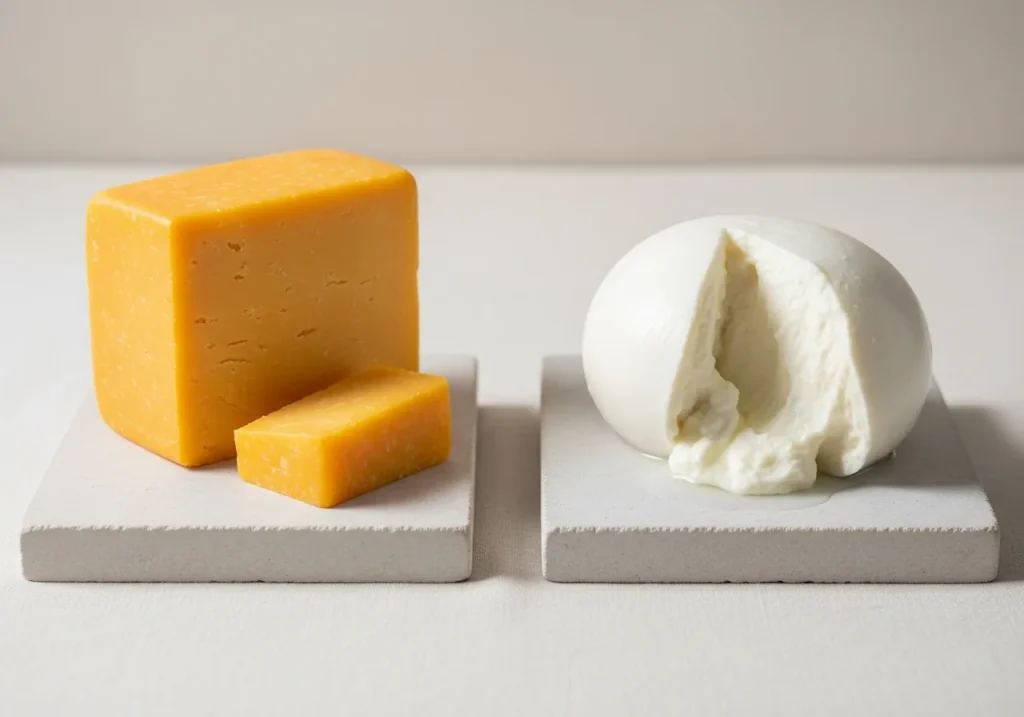
Mozzarella is the lighter cheese on every measure that usually matters. Per 100 g it carries 299 calories to cheddar’s 410, 22.1 g of fat to 33.8 g, 13.9 g of saturated fat to 19.4 g, and 486 mg of sodium to 644 mg. Protein is close — 22.2 g against 24.3 g — so you give up very little by choosing it.
Most of that gap is water. Mozzarella is a fresh cheese and cheddar is aged, and ageing drives moisture off and concentrates everything left behind. It is the same reason cheddar tastes stronger.
| Nutrient | Cheddar Cheese | Mozzarella |
|---|---|---|
| Calories | 410 kcal | 299 kcal |
| Protein | 24.25 g ✓ | 22.2 g |
| Total Carbohydrate | 2.13 g | 2.4 g |
| Dietary Fiber | 0 g | 0 g |
| Total Sugars | 0.27 g | 0 g ✓ |
| Total Fat | 33.82 g | 22.1 g |
| Saturated Fat | 19.37 g | 13.9 g ✓ |
| Sodium | 644 mg | 486 mg ✓ |
Notable compounds in each
When to choose each
Reach for mozzarella when you want cheese for a quarter fewer calories and a third less fat — it melts cleanly and its mildness is the point in a dish where you do not want the cheese to dominate. Reach for cheddar when flavour intensity is what you are buying: it is strong enough that a much smaller quantity does the job, which can close the calorie gap in practice.
Cheddar vs mozzarella nutrition per 100g
Both are hard-ish block cheeses here rather than the fresh mozzarella sold in brine, which is wetter again and lower in everything per 100 g.
A realistic portion is 30–40 g, so a slice of cheddar is around 120–165 calories and the same weight of mozzarella around 90–120. Both are among the more sodium-dense foods in the database — cheese is salted as part of how it is made, not as a seasoning added afterwards.
Common questions
Is mozzarella healthier than cheddar? On the numbers, yes: fewer calories, less fat, less saturated fat and less sodium, for almost the same protein. Whether that matters depends on how much you eat — cheddar’s stronger flavour means a smaller piece often satisfies.
Which has more protein, cheddar or mozzarella? Cheddar, slightly: 24.3 g per 100 g against 22.2 g. The difference is small enough that it should not decide anything.
How many calories are in cheddar vs mozzarella? Cheddar is 410 calories per 100 g and mozzarella 299 — cheddar has about 37% more. A 30 g slice is roughly 123 and 90 calories respectively.
Which cheese is lowest in salt? Between these two, mozzarella at 486 mg per 100 g against cheddar’s 644 mg. Across cheeses generally, fresh unaged types are lower and hard aged types are higher.