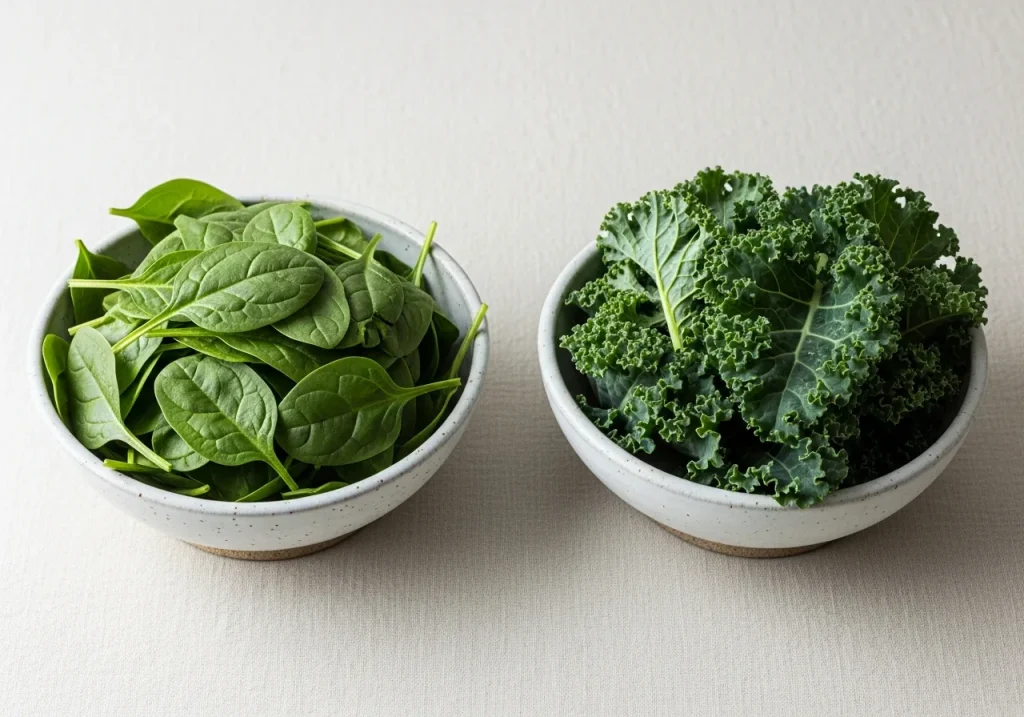
Spinach and kale are the two leafy greens everyone reaches for when a recipe calls for “something green and healthy” — and while both are genuine nutritional powerhouses, they don’t overlap as much as their reputations suggest.
| Nutrient | Spinach | Kale |
|---|---|---|
| Calories | 23 kcal | 35 kcal |
| Protein | 2.86 g | 2.92 g ✓ |
| Total Carbohydrate | 3.63 g | 4.42 g |
| Dietary Fiber | 2.2 g | 4.1 g ✓ |
| Total Sugars | 0.42 g ✓ | 0.99 g |
| Total Fat | 0.39 g | 1.49 g |
| Saturated Fat | 0.06 g ✓ | 0.18 g |
| Sodium | 79 mg | 53 mg ✓ |
Notable compounds in each
When to choose each
Reach for kale when fibre and vitamin C are the priority — it carries substantially more of both — or when a dish needs a leaf that holds its structure through roasting or massaging into a salad. Reach for spinach for its remarkable vitamin K and folate density, its milder flavour, and how quickly it wilts down into cooked dishes. Both are notable sources of oxalates, worth knowing if you’re prone to calcium-oxalate kidney stones.
Common questions
Which has more iron? Spinach is usually cited as the higher-iron leafy green, though the non-haem iron in either is less readily absorbed than iron from meat — pairing either with a vitamin C source improves absorption.
Is kale harder to digest than spinach? Some people find kale’s tougher fibre harder on the gut, especially raw — massaging it with a little oil or cooking it briefly softens the texture and can make it easier to digest.