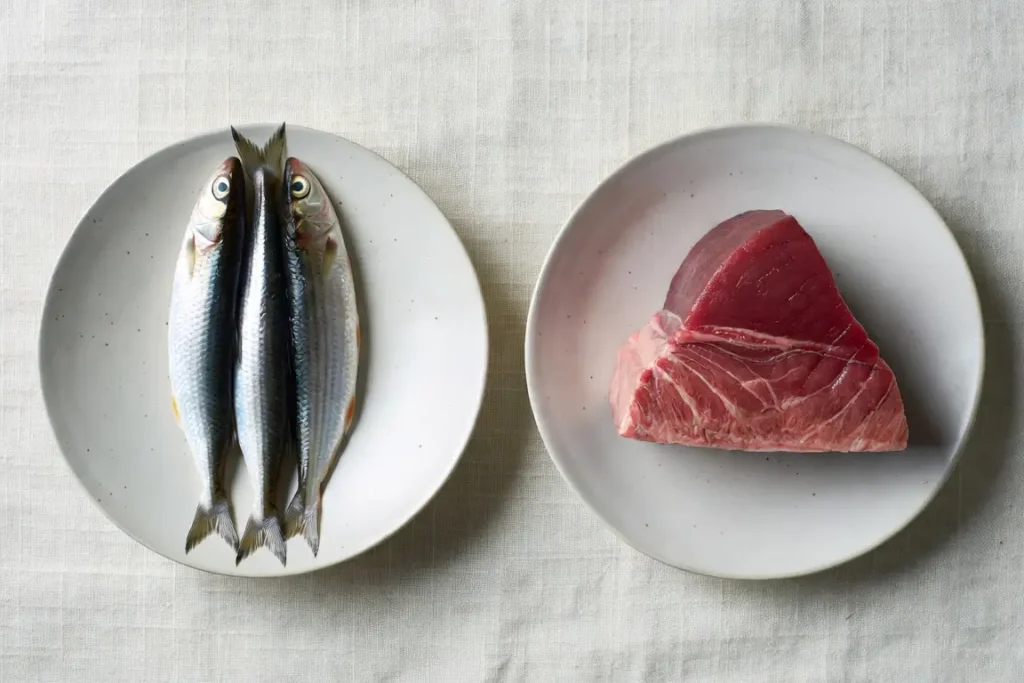
Sardines and canned tuna are the two pantry-staple fish most people actually eat regularly, both cheap, shelf-stable, and rich in protein.
| Nutrient | Sardines | Tuna (canned, light) |
|---|---|---|
| Calories | 208 kcal | 86 kcal |
| Protein | 24.62 g ✓ | 19.44 g |
| Total Carbohydrate | 0 g | 0 g |
| Dietary Fiber | 0 g | 0 g |
| Total Sugars | 0 g | 0 g |
| Total Fat | 11.45 g | 0.96 g |
| Saturated Fat | 1.53 g | 0.21 g ✓ |
| Sodium | 307 mg | 247 mg ✓ |
Notable compounds in each
When to choose each
Sardines carry noticeably more protein and more total fat, including the omega-3s they’re well known for, while tuna is the leaner option on saturated fat and sodium. Both are usually eaten from the tin rather than fresh, and are among the most sustainable, affordable ways to get a serious dose of omega-3 fats and calcium, from the soft, edible bones in sardines, into a diet. Sardines are the more calorie-dense choice; tuna the leaner, milder-tasting one.
Common questions
Are sardines a good source of calcium? Yes, if the bones are included, which is standard in most canned sardines – the soft, edible bones contribute a meaningful amount of calcium that most other fish don’t offer in the same way.
Which has less sodium, sardines or tuna? Canned tuna, generally – though sodium in either varies a fair amount by brand and whether it’s packed in oil, water, or brine, so it’s worth checking the label if sodium is a specific concern.