Tempeh is the more concentrated of the two, tofu the lighter. Per 100 g tempeh carries 192 calories to tofu’s 144, 20.3 g of protein to 17.3 g, and well over half again as much potassium — 412 mg against 237 mg. Tofu is lower in calories and fat (8.7 g against 10.8 g) and carries half the saturated fat, 1.26 g against 2.54 g.
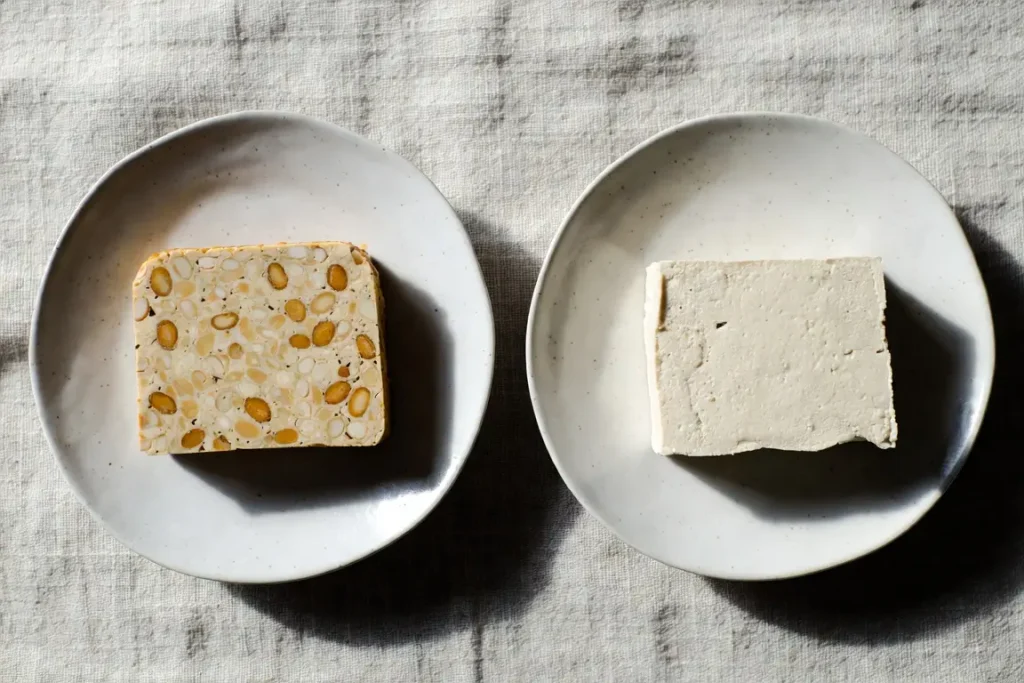
Neither is the healthier food in any general sense. They are made completely differently — tempeh is whole soybeans fermented into a firm cake, tofu is soy milk coagulated into curds and pressed — and that single difference explains almost every number in the table below.
| Nutrient | Tempeh | Tofu |
|---|---|---|
| Calories | 192 kcal | 144 kcal |
| Protein | 20.3 g ✓ | 17.3 g |
| Total Carbohydrate | 7.64 g | 2.78 g |
| Dietary Fiber | — | 2.3 g |
| Total Sugars | — | 0.4 g |
| Total Fat | 10.8 g | 8.72 g |
| Saturated Fat | 2.54 g | 1.26 g ✓ |
| Sodium | 9 mg ✓ | 14 mg |
Notable compounds in each
When to choose each
Reach for tempeh when you want the denser food: more protein and more potassium per 100 g, a firm bite that holds up to grilling and frying, and the whole fermented bean rather than a strained curd. Reach for tofu when you want the lighter one, or a neutral canvas — fewer calories, less fat, half the saturated fat, and an ability to take on whatever it is cooked in that tempeh’s nutty character will not match. Tofu is a notable source of phytates; fermentation gives tempeh a head start on reducing its own.
Tempeh vs tofu nutrition facts per 100g
Both sets of figures are per 100 g of the plain, unseasoned food. Marinated and smoked versions of either can carry considerably more sodium than the 9 mg and 14 mg shown here, which is worth checking on the pack rather than assuming.
Carbohydrate is where the processing shows most plainly: tempeh has 7.6 g per 100 g against tofu’s 2.8 g, because tempeh keeps the whole bean while tofu is made from strained soy milk. A 100 g serving is realistic for both — unlike the herbs and spices elsewhere on this site, these are foods people genuinely eat in that quantity.
Common questions
Is tempeh healthier than tofu? Neither is healthier overall. Tempeh gives you more protein and more potassium per 100 g; tofu gives you fewer calories, less fat and half the saturated fat. Both are minimally processed whole-soy foods and the choice is better made on the dish than on the nutrition panel.
Does tempeh have more protein than tofu? Yes — 20.3 g per 100 g against 17.3 g, roughly 17% more. Tempeh also brings more calories with it, so per calorie the two are closer than the headline suggests.
How many calories are in tempeh vs tofu? Tempeh is 192 calories per 100 g and tofu is 144. Both are plain and unseasoned; frying either in oil adds substantially to both figures.
Can you substitute tempeh for tofu in a recipe? Usually, with an adjustment. Tempeh is firmer and nuttier and will not absorb a marinade the way tofu does, so it suits grilling, frying and crumbling rather than the soft applications tofu handles. Steaming tempeh for a few minutes first softens it and takes the edge off its bitterness.